What is a workshop series?
A workshop series is a connected set of hands-on sessions that gives guests a clear skill path and hosts a repeatable way to guide practice over time.
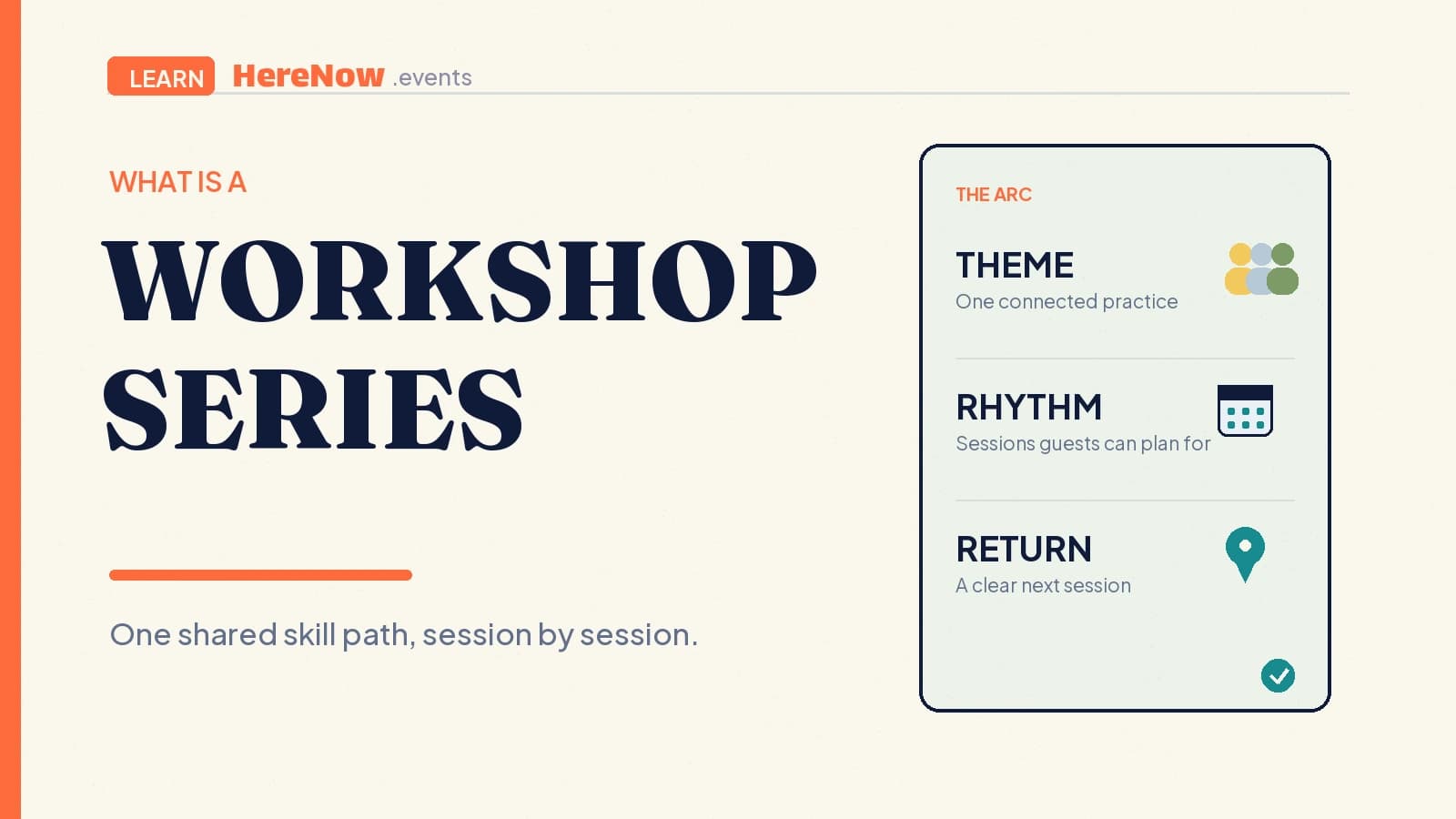
A workshop series is a set of connected, hands-on sessions that help guests explore one skill or topic over time. Instead of placing every idea into one long event, the host gives each meeting a distinct focus and a clear link to the next. A four-part ceramics class, a monthly photo-walk practice group, or a beginner language series can all be workshop series when the sessions share one learning path and guests know how to join it.
A workshop series has one throughline across several sessions
The throughline is what makes a series more than several events with similar titles. It might be a skill that grows in stages, a project that develops each week, or a shared practice guests return to. A series can also become a community event when that practice gives local people a welcoming reason to meet again. A University of New Hampshire Extension series offers a concrete example: seven weekly sessions move from setting goals and asking questions through facilitation and real-world practice, with a final session that brings the work together. Its published outline makes both the cadence and the progression visible before someone commits.
For an independent host, the throughline can stay modest. “Learn four ways to prepare seasonal vegetables” is enough for a four-session cooking series. Each meeting can teach one technique, make room for practice, and point toward the next technique. Guests should be able to understand the whole promise in one sentence, then see what each session adds.
It is different from a recurring workshop
A recurring workshop repeats a familiar format: for example, an open printmaking night every second Wednesday. People can usually attend once or return whenever they like. A workshop series has a connected sequence. Session two may assume the materials, vocabulary, or confidence built in session one, even if the host still welcomes a newcomer with clear catch-up guidance.
This difference changes the invitation. A recurring format needs a dependable rhythm and a simple description of what happens each time. A series also needs its start date, total number of sessions, attendance expectation, and whether guests should register for the whole path or select individual sessions. The host should choose the structure that matches the learning promise, rather than using “series” merely to make separate events sound connected.
Choose a commitment model before publishing
Guests make better RSVP decisions when the commitment is explicit. A host can use one of four simple models:
- Full-series registration: one RSVP covers every session; useful when the work is cumulative.
- Session-by-session registration: each workshop stands on its own, with a shared theme.
- Core plus optional sessions: a short foundational path, then more practice or project clinics.
- Drop-in with a clear entry point: guests can join late, but the host states what to review first.
The model affects capacity, materials, communication, and how a host prepares each room. A seven-week college workshop series can reasonably ask participants to attend most sessions; Algonquin College’s own six-week course-design series states the total time commitment and explains how a missed session may be made up. A neighborhood host does not need the same policy, but can borrow the clarity.
Plan the whole arc before planning each workshop
Begin with the outcome at the end of the series: what can a guest make, practice, understand, or choose with more confidence? Then name the smallest useful outcome for each meeting. University of Maryland Extension recommends that a multi-session plan consider the session number, date, topic, key points, and outcomes, before the educator creates the detailed plan for individual workshops. That planning distinction is valuable for hosts because it prevents session three from becoming an unrelated idea added at the last minute.
Put the series arc in one small table or note for yourself: Session 1—orientation and first attempt; Session 2—repeat with a new constraint; Session 3—make or share something more independently; Session 4—reflection, showing work, and next steps. Then create a detailed workshop agenda for each date. The series plan keeps direction; the session plan keeps the room runnable.
Make every session active and leave a bridge to the next
A useful workshop series is not four short lectures in a row. Oxford’s teaching guidance recommends planning not only aims and content, but what participants will do, what resources they use, how they work together, flexible time for activities, and a final moment to draw things together. Those planning prompts translate well to hands-on public workshops, even outside a classroom.
End each session with a bridge: one small thing to bring, notice, try, or decide before the next meeting. It might be a photo to take on a walk, a question to ask a family member before a storytelling session, or a clay piece to keep dry for the next stage. A bridge gives the next session a natural beginning without turning an informal community gathering into homework.
Example: a four-session beginner ceramics series
Imagine a host offering “Hands in Clay: Four Saturday Mornings.” The public description says that each two-hour session builds toward a small set of finished hand-built pieces, and that the first three sessions are best attended in order. Session one introduces clay and pinching; session two covers coils and joining; session three focuses on surface texture; session four is a relaxed glazing and sharing session. Guests can see the whole arc before they RSVP.
The host’s plan reserves a few extra tools for newcomers, adds a 10-minute recap at the start of each session, and makes the final session optional for people who only want to observe glazing. On HereNow, the host can turn that idea into an editable event page, publish a clear registration path, and use the same structure as a repeatable starting point for the next series.
Frequently asked questions
How many sessions should a workshop series have?
There is no universal number. Start with the smallest number that lets the promised practice unfold without rushing. Three or four sessions suit many beginner skills; a longer path may fit a community project. Choose the count from the throughline, guests’ available time, and the preparation each session genuinely requires.
Can guests join a workshop series late?
Yes, if the host designs a sensible entry point. Say which session is best for newcomers, offer a short recap or starter material, and avoid implying that a late guest has had the same experience as someone who attended from the beginning. For cumulative skills, full-series registration may be the clearer choice.
Should every session use the same format?
Not necessarily. Keep the shared rhythm familiar—welcome, making or discussion, reflection—but let the activity change as the skill develops. A series can move from demonstration to paired practice to a project clinic. The important part is that each variation advances the common throughline and is explained clearly in the agenda.