What is a workshop?
A workshop is a guided, participatory event where guests learn or make something through focused practice. Learn what makes a workshop work and how to host one clearly.
Workshop, in plain English
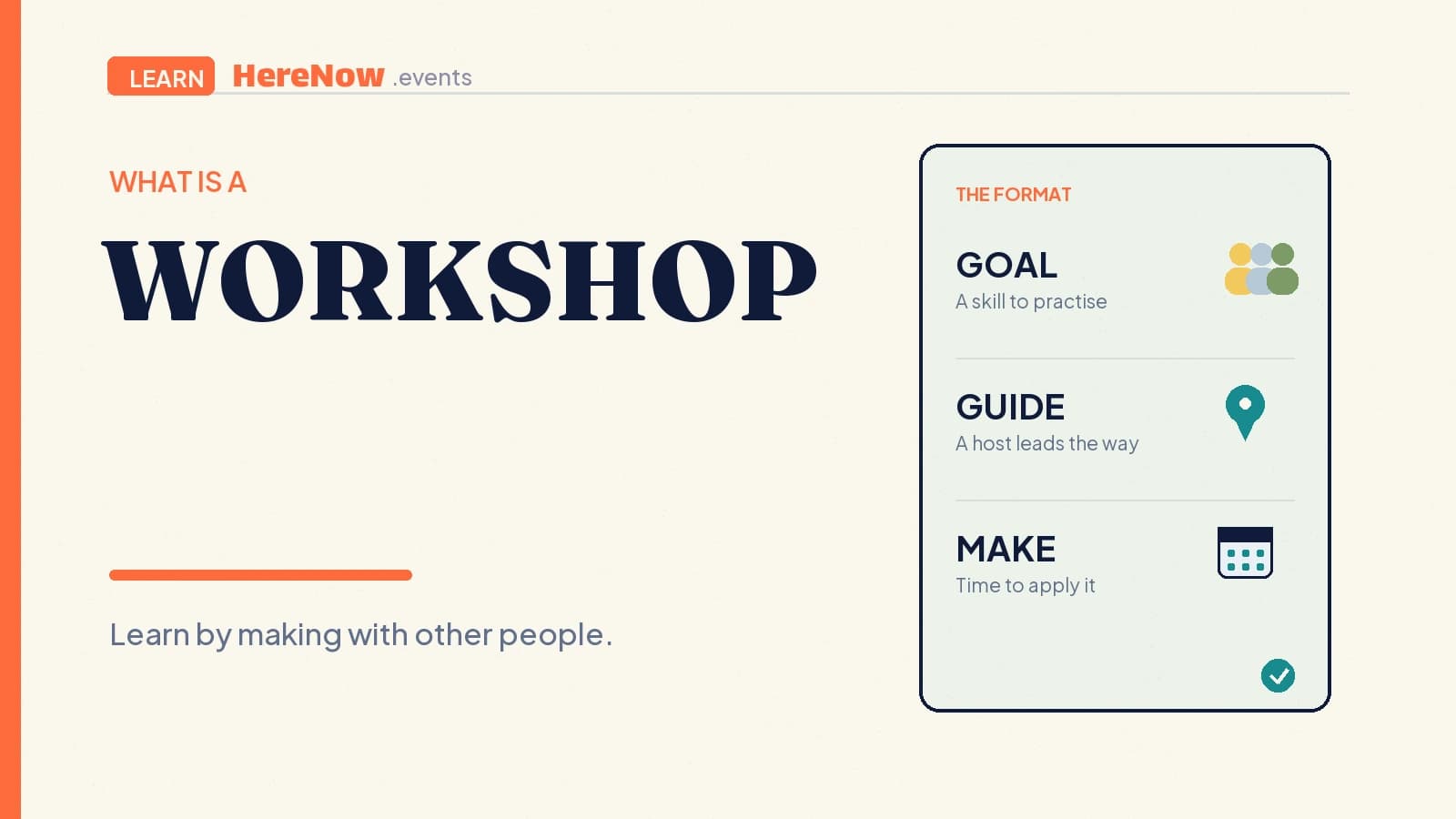
A workshop is a focused, participatory event where people learn, practise, make, or solve something with guidance. Instead of only listening to a speaker, guests take part: they try a technique, discuss an example, build an object, or work through a problem. A workshop can be a short standalone session or part of a series, but it gives people a clear activity and a useful next step.
Think of a beginner pottery session, a sourdough class, a portfolio review, or a facilitation lab. The subject changes, yet the format stays recognisable: a host frames the goal, makes room for participation, and helps guests turn an idea into practice. The University of Kansas Community Tool Box describes workshops as short educational programmes that introduce practical skills, techniques, or ideas people can use.
What makes a workshop different from a class, talk, or meetup?
The boundary is not absolute, but participation is the useful distinction. A talk primarily asks guests to listen. A meetup may centre on conversation or social connection without a shared learning outcome. A class may stretch across weeks, with broader study and assessment. A workshop is usually more contained: it gathers people for a defined outcome and gives them time to engage with the material together.
That does not mean every minute has to be hands-on. A host can explain a technique, show a demonstration, then invite questions or guided practice. What matters is that the session is designed for guests to do more than receive information. The University of Rochester’s workshop education model likewise treats workshops as interactive sessions where people work through problems together.
The building blocks of a clear workshop
Guests should be able to see the shape of the experience before they decide to register. A useful workshop invitation answers three practical questions:
- What will I be able to do or understand? Name one realistic outcome, such as “make a small coil pot” or “leave with a first draft of your artist bio.”
- What will happen during the session? Share the main beats: a welcome, a short demonstration, guided work, discussion, and a close.
- What do I need to bring or know? State the level, materials, access needs, and anything included in the ticket or RSVP.
These details are not filler. They help a guest judge whether the workshop fits their time, confidence, and interests. Educational planning guidance from the University of Maryland Extension connects objectives with the methods, materials, timing, and evaluation used in a learning activity. For a host, that is a simple planning prompt: choose the intended result first, then make the session supports it.
An illustrative pottery workshop
Imagine a two-hour, ten-person beginner pottery workshop. The host opens with a welcome and a quick look at the finished form. After explaining clay safety and demonstrating the first steps, everyone spends 65 minutes making a small pinch pot with individual guidance. The final section is for sharing, clean-up, and clear information about firing and collection.
It is a workshop because guests have a shared purpose and time to try the process. The host is not promising that everyone will become a ceramicist in one evening. They are offering a welcoming first practice, enough context to begin, and an honest explanation of what happens next. A visible agenda also gives a nervous newcomer a clearer decision than “creative evening” alone.
Design the event page around the guest decision
A workshop page is where the promise becomes actionable. Start with a title that identifies the subject and level, then show the date, duration, location or online access, price or RSVP requirement, and what is included. A separate event page helps keep those essentials in one shareable place. If seats are limited, set the number you can realistically guide and make the remaining availability accurate; event capacity is part of both planning and guest trust.
Then make the joining action specific. A guest should know whether they are reserving a seat, requesting approval, or buying a place, as well as what confirmation they will receive. Clear event registration details reduce the need for people to ask basic questions before they commit. They also help the host prepare the right materials and room set-up.
Make the format repeatable for the host
The best first workshop is not necessarily the most elaborate one. It is a format you can explain, host safely, and improve after listening to participants. Keep a short planning routine: define the outcome, choose the activity, list the materials, block the time, and note what you want feedback on. The Food and Agriculture Organization of the United Nations recommends working from objectives into content, procedure, and a timed programme when preparing training; its facilitation guidance is useful background for that sequence.
On HereNow, a host can start with an editable workshop template, shape the page around their actual session, and adjust the details as the plan develops. Saving that structure makes future workshops easier to repeat without making every occasion identical. When the essentials are ready, start with a workshop template and review the page as if you were deciding whether to join for the first time.
Frequently asked questions
Is a workshop the same as a class?
Not always. A class often has a longer curriculum, repeated meetings, assignments, or assessment. A workshop is usually a more contained learning experience built around a practical topic or activity. A workshop can introduce a subject that later becomes a class, but its promise should match the time and depth guests will actually receive.
How long should a workshop be?
The right length depends on the outcome and the amount of practice involved. A short session can introduce one small idea or technique; a more involved making or skill-building activity needs enough time for demonstration, practice, questions, and a close. Plan the outcome to fit the available time rather than trying to cover every part of a broad subject.
Does every workshop need a hands-on activity?
No, but guests should have a meaningful way to participate. That might be guided problem-solving, small-group discussion, peer feedback, or trying a technique. If the event is only a presentation with questions at the end, calling it a talk or lecture may set clearer expectations. The format name should help people understand what joining feels like.