What is a pop-up event?
A pop-up event is a temporary gathering with a clear, limited-run occasion. Learn what makes the format distinct and how to communicate it clearly to guests.
Pop-up event, in plain English
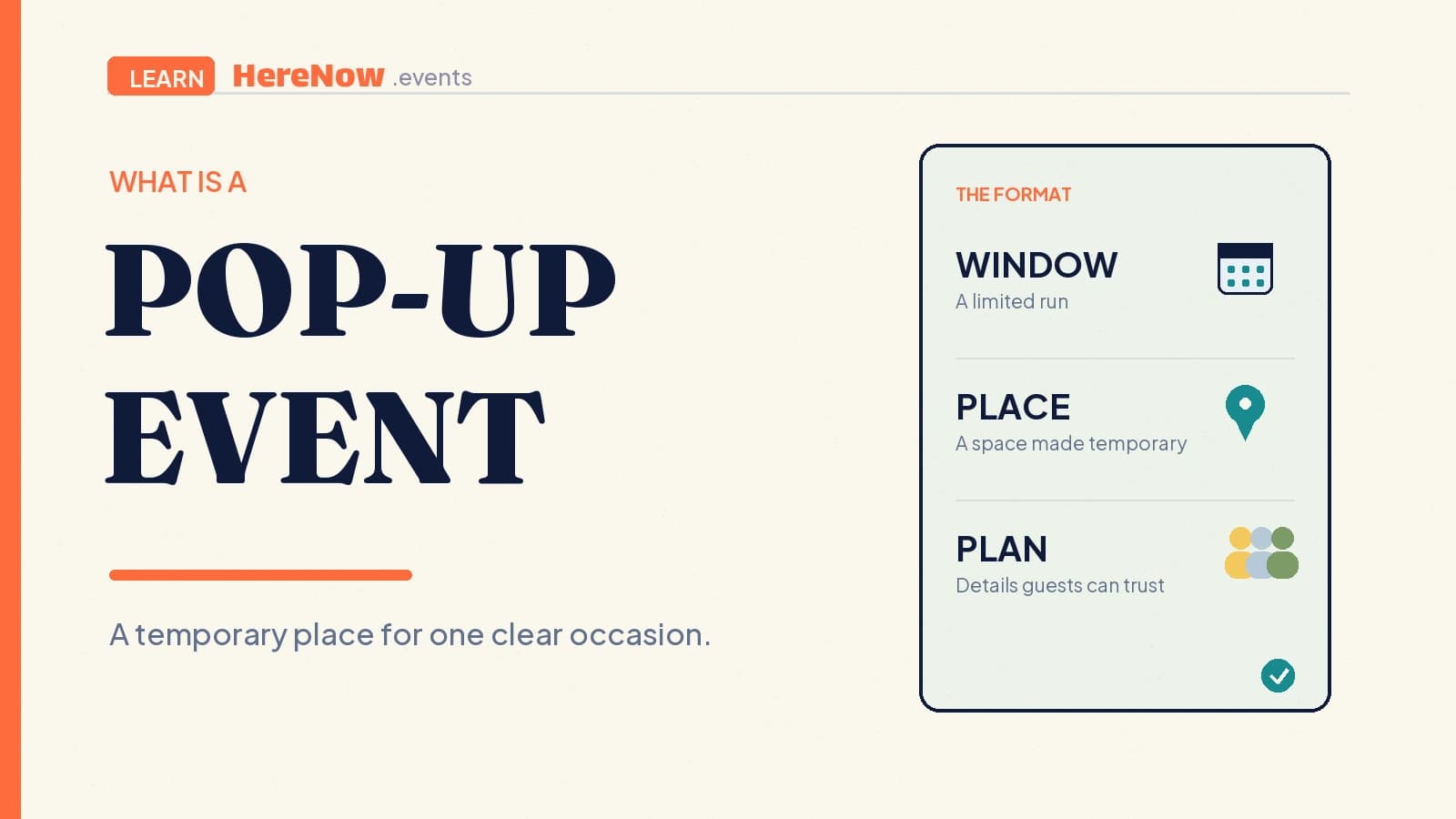
A pop-up event is a temporary gathering that appears in a place for a limited run rather than operating there all the time. It can be a one-night supper club in a borrowed studio, a weekend zine fair in a café, a listening session in a shop, or a short workshop in a community space. Its defining feature is the temporary, occasion-specific use of a place—not a particular audience size, price, or level of production.
The term is used differently in different places. For example, the City of Miami defines a pop-up event in its local code as temporary activity for selling, advertising, or a limited period. Miami’s special-event definitions are useful evidence of the central idea: a pop-up has a short-lived presence. A host should still describe the actual experience, not rely on the label alone.
What makes a pop-up different from a permanent programme?
A recurring class, market, or club may have a stable home and regular operating rhythm. A pop-up uses a temporary window to create a specific occasion. The space may be borrowed, hired, shared with another business, or repurposed for a single event. The host may return with a new pop-up later, but each edition should make its own time, location, and guest plan clear.
That temporary quality can make an invitation feel timely, but it is not permission to be vague. Guests still need the same basics: where to arrive, when the doors open, what they are joining, what is included, and how to reserve a place. A good event page puts those answers together before the host starts sharing the link. In Portland, for instance, the city’s community-event permit guidance describes street and sidewalk pop-ups that last one or two days—one local illustration of how a temporary window can still need a defined plan.
Build the pop-up around one clear occasion
Temporary events become easier to understand when every choice supports one occasion. Start with a simple sentence: “For one Saturday afternoon, we are turning this bookshop corner into a printmaking table,” or “For one evening, this restaurant is hosting a six-course regional supper.” Then make the guest decision practical:
- Time window: name the date, start and end time, and any arrival window.
- Place and set-up: say where people enter, whether they will be seated or moving around, and what the temporary space will contain.
- Joining terms: state whether guests need a ticket or RSVP, what it includes, and what they should bring or arrange themselves.
These details help the pop-up feel intentional rather than improvised. They also let guests decide quickly whether the one-off moment fits their schedule and needs. Use the same language in the confirmation message so the information does not change between deciding to join and arriving. A clear event registration path makes the RSVP action and the expected follow-up equally visible.
An illustrative supper-club pop-up
Imagine a host borrowing a neighbourhood bakery after its regular closing time for a twelve-seat vegetarian supper club. The event page calls it a one-night pop-up, shows the exact entrance, lists the 7:00 p.m. arrival time, and explains that the shared menu is served at 7:30. It asks about dietary requirements at registration and makes clear that the meal, water, and service are included while any optional drinks are separate.
That is a meaningful use of the format: the bakery’s ordinary space becomes a short-lived, hosted experience with a clear beginning and end. A guest is not being asked to guess whether the gathering is a restaurant booking, open-house party, or cooking class. The host can later reuse the invitation structure for another location while changing the menu, timing, and capacity to fit that edition.
Temporary does not mean skipping the local checks
Before confirming the public invitation, check what the venue owner and local authority require for that actual plan. Requirements can change with the location, attendance, food or alcohol, amplified sound, traffic effects, or temporary structures. They are jurisdiction-specific; this article is not legal advice. As examples, Austin’s event planning guide identifies temporary structures, sound, and food or beverages among factors that can trigger local review. Santa Monica’s community-event permit explanation likewise notes that an event of any size needing certain temporary structures may need a permit.
Public-space pop-ups can require even more coordination. Your own city, venue, and relevant professional guidance are the source of truth for the location you are considering. Check them early enough to make a different plan if the space, set-up, or proposed activity needs it.
Make the next pop-up easier to host
A short run is a reason to make the planning routine tighter, not to start from scratch every time. Keep a reusable checklist for the invitation, venue agreement, access information, seating or flow, materials, guest confirmation, and breakdown. After each event, capture the questions guests asked and the details that changed on the day. That note is the raw material for a clearer next page.
On HereNow, you can begin from an editable event template, publish the details guests need to decide, and adjust the plan as the pop-up takes shape. When your one-off occasion is ready to describe honestly, use a template for your pop-up event and review the RSVP path as a first-time guest would.
Frequently asked questions
Does a pop-up event need a permit?
It may, depending on the location and the event elements. A private indoor gathering can have different rules from a public-space event with food, alcohol, sound, tents, or a street closure. Ask the venue owner and check the relevant local authority early. Do not assume that calling an event a pop-up changes the requirements that apply to it.
How much notice should a pop-up event have?
Give yourself the lead time needed to confirm the venue, any permissions, suppliers, and the guest information. A short public run does not have to mean last-minute planning. Share the event once the important details are reliable, then repeat the date, location, and joining terms wherever guests encounter the invitation.
Can a pop-up event happen more than once?
Yes. A host can create a series of temporary editions in different places or at different times. Treat each edition as its own event when the location, date, menu, activity, or guest conditions change. A consistent format can be useful, but the page should always describe the version people are actually considering.