What is an event recap?
An event recap is a thoughtful post-event record that preserves useful moments, shares approved materials, and helps a gathering carry forward without exposing private information.
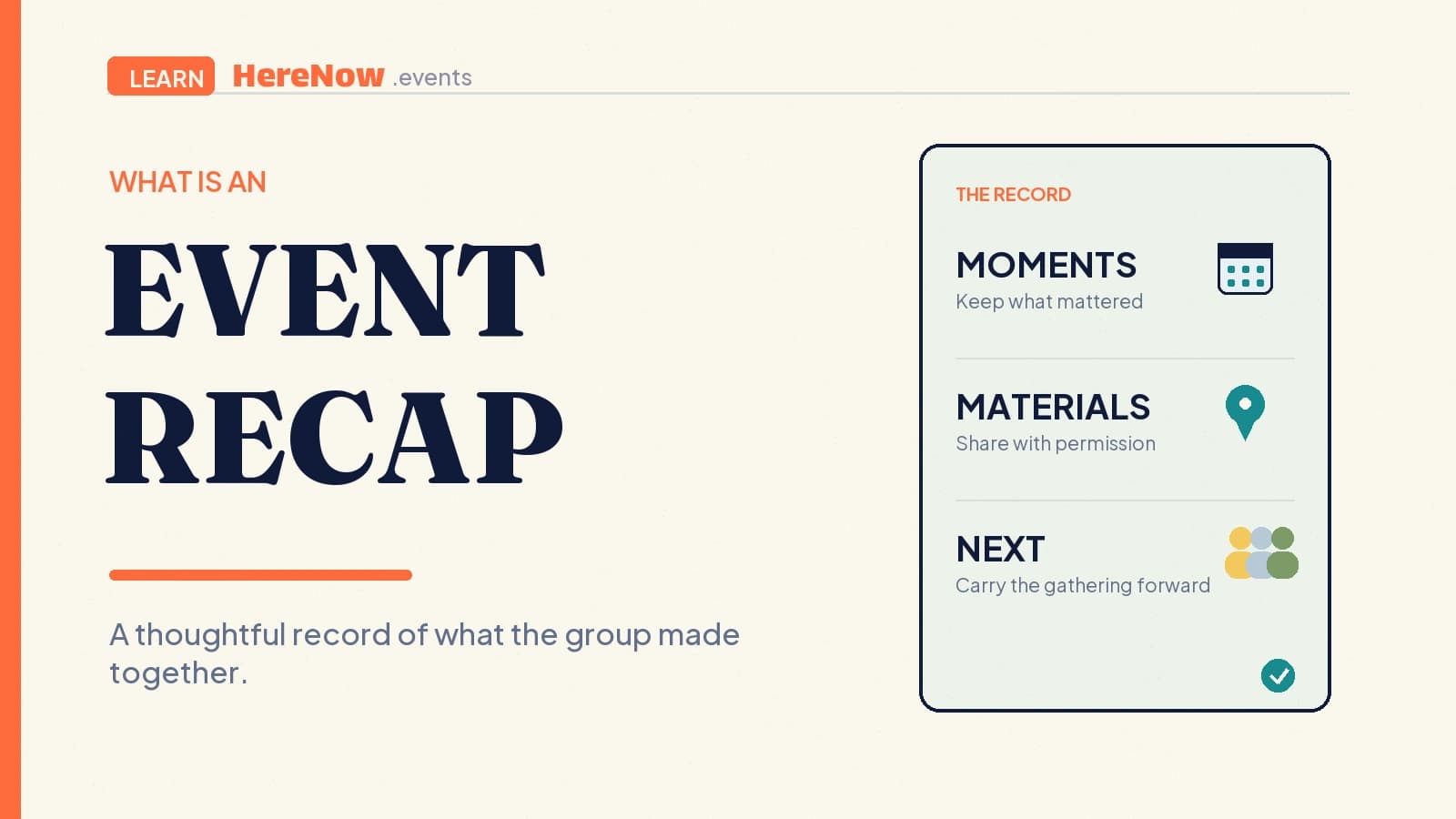
An event recap is a post-event page or update that explains what happened, preserves the parts worth returning to, and gives people a clear next step. It can hold a short summary, takeaways, selected photos or recordings, useful resources, and news of what comes next. Unlike an event announcement, it is not trying to fill a room that has already emptied. It is a record for guests, people who missed the event, and the host planning the next one.
A recap turns a gathering into a useful record
Events disappear quickly: the room resets, and the useful ideas live in scattered notes and camera rolls. A recap gathers the public-facing parts into one place. It lets attendees revisit a recommendation, lets someone who missed it understand the point of the gathering, and gives a host a reference when the next date is being planned.
The University of Arkansas describes an event recap as a story published after an event, distinct from an announcement designed to bring people in. For an independent host, it can be the natural second chapter of an event page: what happened, why did it matter to this group, and what can a reader do with it now?
It is not a transcript or a victory lap
A good recap is selective. It does not need to reproduce every introduction, list every person present, or prove that the event was a success. Name the activity, describe one or two moments or ideas that mattered, and share only material that helps the reader. For an intimate gathering, that may be a paragraph and a resource link.
Write for the people who need the page, not an abstract audience. Guests may want a reminder of the activity and a way to continue. People who missed it may need enough context to decide whether a future community event is for them. Keep the tone specific and proportionate to the event itself.
Start with a small, responsible content set
For most workshops, talks, walks, and social gatherings, a recap can be built from four small pieces:
- Context: the event name, date, setting, and a sentence about what the group came together to do.
- What was useful: two or three takeaways, outcomes, or moments described in plain language.
- Selected materials: a few photos, a resource list, slides, or a recording only when they are appropriate to share.
- The next step: a thank-you, a practical follow-up, or a link to the next gathering when there is one.
That is enough structure without turning the page into an archive dump. The University of Arizona’s post-event recap guidance pairs feedback with materials, summaries, key takeaways, and future updates. At a smaller scale, publish what helps people continue the experience, not everything collected along the way.
Keep public storytelling separate from private learning
A public recap and an internal debrief serve different purposes. The recap can say that a beginner ceramics group practiced three glazing methods and will meet again next month. Private notes can record that the tables were crowded, instructions needed more time, or a supplier arrived late. Both are valuable; they do not belong in the same place.
A recap is not the place for a guest list, contact details, attendance history, private feedback, or a raw survey export. Capture host learning separately, then turn only the shareable conclusion into the public page. This protects participants and prevents a friendly workshop recap from becoming a record of who did or did not show up.
Get permission before sharing people and their work
Before you add photographs, video, slides, artwork, or direct quotes, check what was agreed and what the context makes reasonable. A close-up portrait deserves more care than a wide room shot; a small peer-support gathering may call for no images at all. Make the intended use clear and give people a practical way to opt out. Portsmouth City Council’s photo-consent guidance distinguishes main subjects from event photography and explains the value of notice and stated purposes.
Slides, recordings, and photos have creators too. In the United States, copyright owners hold rights to reproduce, distribute, and display their work, subject to agreements and legal limits; the U.S. Copyright Office explains those rights. This is not legal advice, and rules vary. Ask the speaker, photographer, or contributor what can be shared, credit them accurately, and link rather than re-upload when that is the agreed approach.
Publish while the event is still clear
Do not wait for a perfect write-up. Draft the outline soon after the event, while activities, key phrases, and practical details are reliable. The University of Arkansas recommends timely publication; for a small host, that can mean a concise update within days, followed by materials later if they need review. Accuracy and consent matter more than speed, so it is fine to leave out a photo or recording until it is cleared.
On HereNow, a host can use the recap flow to turn a completed event into a shared page with a summary, selected photos, and approved resources. End with a calm invitation: thank guests, note one thing the group made possible, and point to the next relevant date only when it is useful.
Example: a neighborhood sketch walk
After a Saturday sketch walk, the host posts a short recap: twelve neighbors met at the library steps, drew three nearby storefronts, and swapped quick observations about shadow and lettering. The page includes two wide photos of the group from behind, a link to the public route map, and three drawing prompts contributed by the volunteer instructor. It does not publish names, close-up portraits, or everyone’s sketches.
The final line thanks the instructor and links to the next monthly walk. Guests have a record, a newcomer can understand the format, and the host has a reusable outline. It is specific enough to carry the experience forward and small enough to respect the people who made it.
Frequently asked questions
When should I publish an event recap?
Publish the core recap while the event is still easy to describe accurately—often within a few days. If photos, slides, or recordings need approval, publish the written summary first and add those materials later. A short, timely and truthful recap is more useful than a polished page that arrives after everyone has moved on.
Does an event recap need photos?
No. A clear summary, a few takeaways, and a useful next step can be a complete recap. Use photos only when the people shown and the intended use are appropriate. For sensitive, private, or very small gatherings, no images may be the most respectful choice.
Can I share a speaker’s slides or a recording in the recap?
Yes, when the speaker or rights holder has agreed to that use and any participant privacy concerns are addressed. Confirm whether the file can be downloaded, whether it should be linked instead, and how the creator wants to be credited. If approval is unclear, leave the material out until you have it.