What is a ticket tier?
A ticket tier is a distinct ticket choice within one event. Learn when to use tiers and how to make price, access, and availability easy to compare.
Ticket tier, in plain English
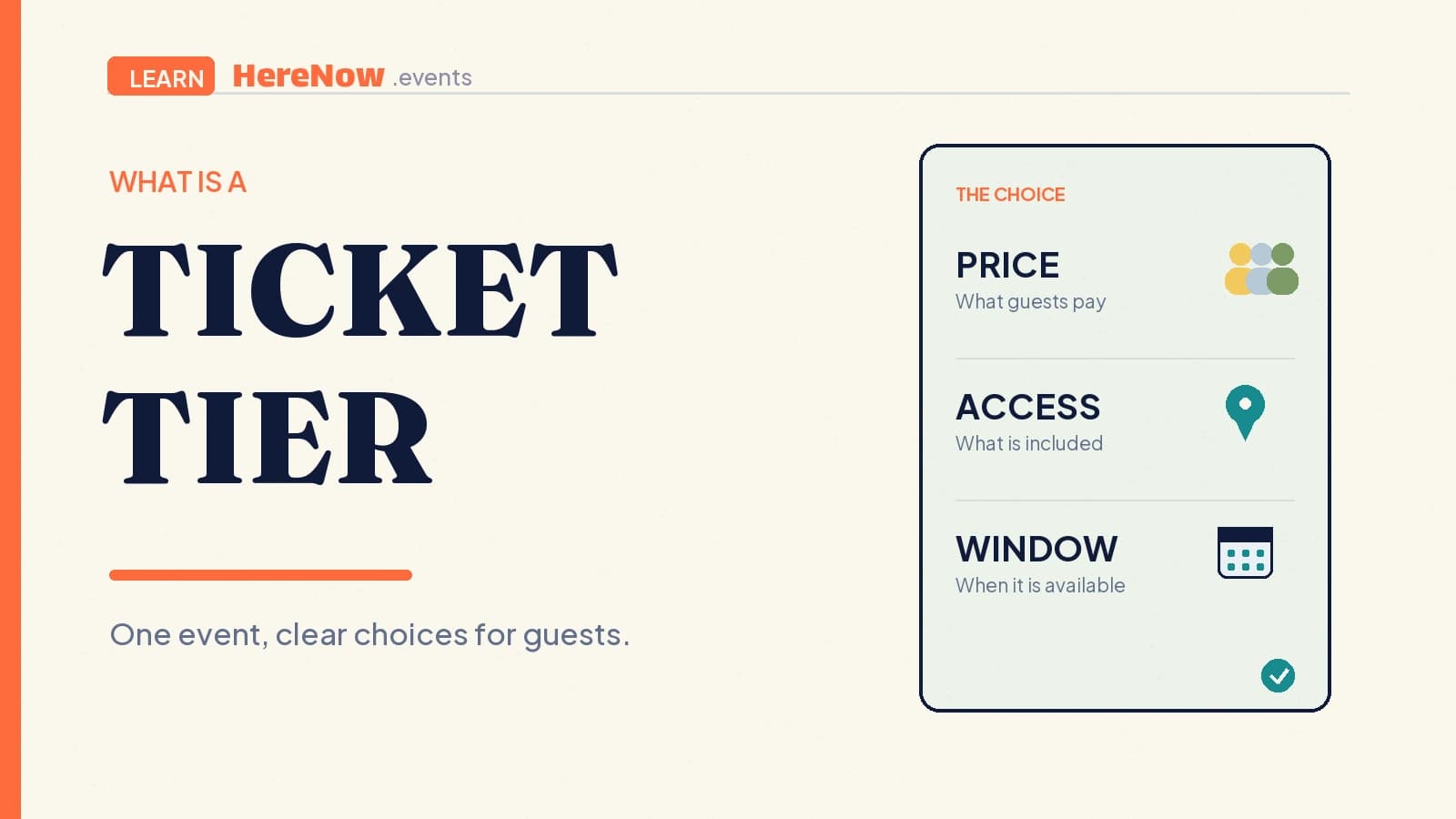
A ticket tier is one of the distinct ticket choices for the same event. Each tier tells a guest what they can join, what it costs, and when or how many are available. A pottery workshop might offer an Early Bird ticket and a Standard ticket; both admit someone to the same session, but the first is available earlier or in a smaller quantity. A tier can also represent a genuinely different experience, such as a class-only place versus a place that includes materials.
The useful idea is choice with a reason. Tiers are not a requirement for every event. A single ticket is often best for a simple walk, language exchange, or community supper. Add tiers only when they help a guest make a clearer decision about timing, eligibility, access, or what is included.
What can make one tier different?
A tier can differ by price, quantity, sale window, entry access, or eligibility. University ticketing guidance, for example, lists cost, available quantity, per-person limits, sale dates, and who can buy as separate settings for a ticket option. Yale Connect’s ticket setup guidance is a useful reminder that a tier is more than a label beside a price.
Use a different tier name only when the guest-facing difference is real. “Student” should state the eligibility requirement. “Materials included” should say which materials. “Reserved front row” should mean there is actually a reserved front row. If two choices give exactly the same access at the same time, they are probably duplicate settings rather than helpful tiers.
Three reasons a small event might use tiers
- Release timing: an Early Bird option is available before the regular price, with a stated deadline or limited number.
- Different inclusions: a cooking class can separate a seat-only ticket from a seat plus ingredient kit.
- Eligibility or access: a community club can offer a member ticket and a guest ticket when the rules and experience are clear.
These are ways to organise a real invitation, not tricks for adding noise. If the event has only twelve places, start with the capacity you can host well. Then make sure the quantities across your active tiers still fit that plan. A thoughtful event capacity gives every ticket choice a believable limit and protects the experience guests are joining.
An illustrative workshop setup
Imagine a host running a six-person beginner ceramics workshop. They create two choices: “Early Bird — $38” for the first three people who register before a stated date, and “Standard — $48” for the remaining three places. Both include the same two-hour session, clay, and firing. The only difference is when the guest commits and the price attached to that release.
That is a clean tier structure because the buyer can compare it in one glance. By contrast, calling the second choice “Premium Standard” without adding a material, access, or timing difference makes the event harder to understand. When a tier has a specific condition, show the condition beside the price, not in a vague note at the bottom of the page.
Make the choice easy to compare
For every active tier, a guest should be able to find four answers quickly: what is included, who can select it, how much it costs, and when it is available. If there is a quantity cap, say so accurately. If a price changes after a deadline, name the date and time in the event’s time zone. Keep the difference in the ticket description as well as the title.
Price clarity matters beyond good manners. For covered live-event ticket offers in the United States, the FTC’s fee guidance says businesses must disclose the total price upfront when it can be calculated, and make the final amount prominent before payment. Other places have their own rules: the ACCC explains Australia’s total-price requirement for presented prices. These sources are not a substitute for local advice, but they point to a practical standard: do not make guests hunt for unavoidable costs.
Set tiers with a repeatable host routine
First, write the one-sentence promise of each choice. Next, decide its price, quantity, sales window, and any per-order limit. Finally, read the event page as a first-time guest: can they tell which ticket fits them without sending a message? This small review becomes easier each time you publish an event, especially after you notice the questions guests repeatedly ask during registration.
HereNow’s ticket settings support a separate name, description, price, quantity, maximum per order, sale start and end, status, and display order for each ticket. That means the release plan can stay connected to one editable event page rather than a collection of workarounds. When your choices are ready to explain in plain language, add ticket tiers to your event and check the guest view before sharing the link.
Frequently asked questions
Is a ticket tier the same as a ticket type?
Often, yes. Hosts use both terms for a selectable option within one event. “Tier” usually emphasises a level, release, or difference in value, while “ticket type” can be broader. What matters to guests is that each choice has a clear name, price, availability, and explanation of what it includes.
How many ticket tiers should a small event have?
Use the fewest that communicate a real choice. One ticket is enough when every guest receives the same experience. Two tiers can work well for an early release and a regular release, or for two genuinely different inclusions. Add another only if a new guest decision or capacity need makes it useful.
Can a free ticket be a tier?
Yes. A free member or community ticket can sit beside a paid guest ticket when the eligibility and access are explained honestly. Do not use a free option as a vague teaser if most guests cannot actually choose it. A clear tier tells people whether they qualify and what action to take next.