What is a roundtable event?
A roundtable event is a structured peer discussion around a shared question or goal. Learn how to frame, facilitate, and make the joining details clear.
Roundtable event, in plain English
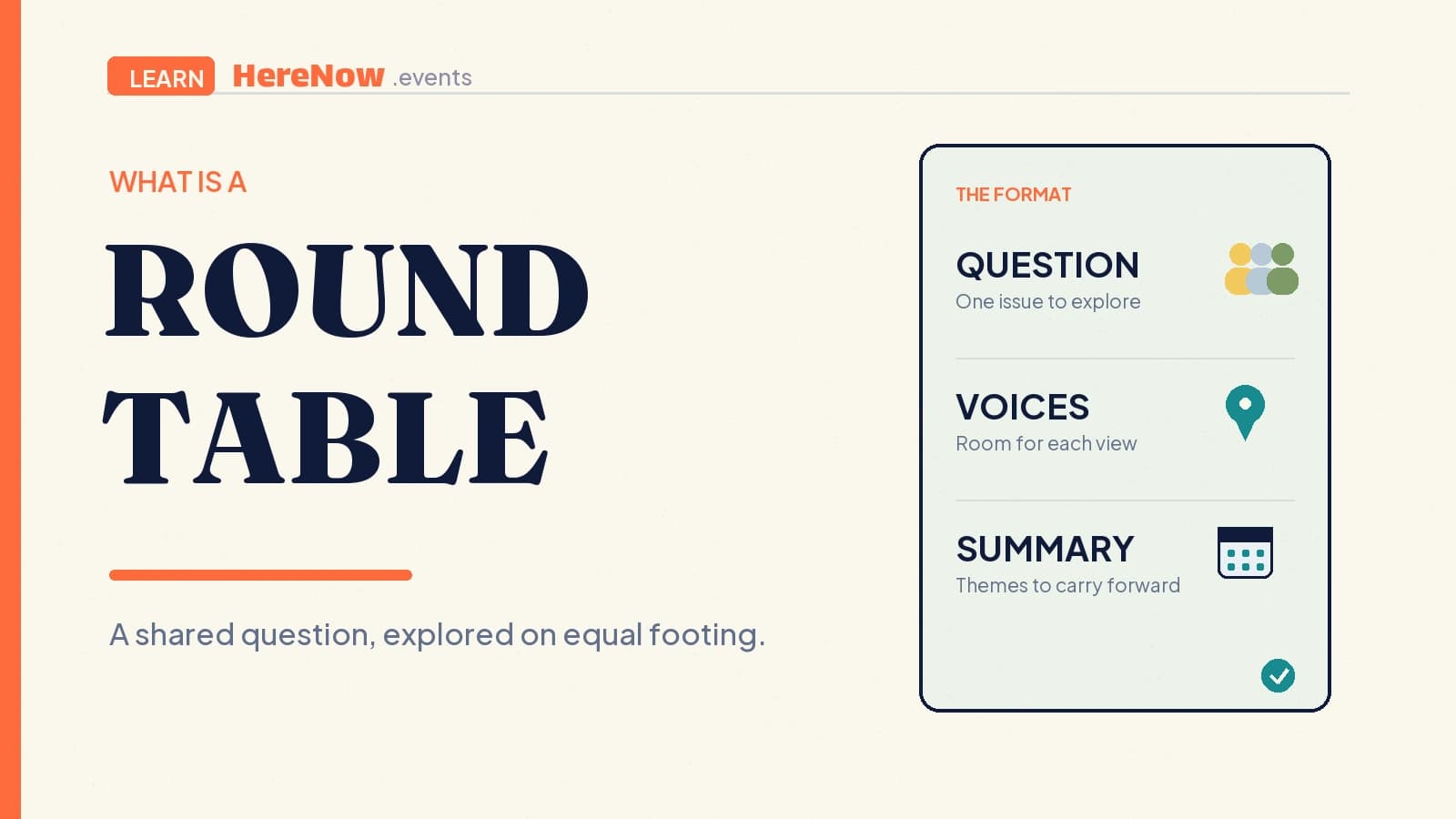
A roundtable event is a structured discussion where participants contribute on relatively equal footing around one shared topic or decision. It may take place at a literal round table, but the important part is the format: the host or facilitator guides the process, while the people in the room bring the ideas, questions, and experience. A roundtable can be a local-host discussion, a creative peer exchange, or a community planning session.
It is not simply a panel with chairs in a circle. A panel centres speakers; a roundtable centres the conversation among participants. The host can invite a few opening perspectives, but guests should understand that they are joining a discussion with a purpose, not arriving to passively watch experts talk.
What gives a roundtable its shape?
A useful roundtable has a focused issue, relevant participants, a facilitator, and a visible way to close. The U.S. Small Business Administration describes an agency roundtable as an open, structured discussion among peers around a shared topic or goal, where people have an opportunity to contribute their perspectives. Its roundtable notice guidance also treats the topic, host, attendance action, and accessibility contact as core invitation details.
For an independent host, this does not need to become formal bureaucracy. It means writing one sentence that says why this group is meeting and what kind of contribution is useful. “Share what makes a beginner-friendly run club sustainable” gives guests a very different decision from “networking roundtable.”
Plan the conversation before you invite people
Decide what the group can realistically explore in the time available. A good starting structure is:
- Frame: a brief context and one clear question.
- Exchange: prompts that let people share examples, uncertainty, and different approaches.
- Synthesis: a final summary of themes, open questions, or next steps.
Carleton College’s roundtable-leader guidance makes the balance explicit: leaders moderate and contribute expertise, participants should have chances to speak without domination or drift, and unresolved questions can remain at the end. A complete solution is not the only valid outcome; clearer shared understanding can be enough.
An illustrative host roundtable
Imagine a host inviting eight local language-exchange organisers to a 75-minute roundtable on “How do newcomers know where to begin?” The event page says that everyone is welcome to bring one example from their own event, that the first ten minutes will set the question, and that the final section will collect practical ideas. A volunteer records agreed resources on a shared sheet, but no one is asked to represent an entire community.
The format gives equal value to lived experience and practical questions. The host may share their own method, yet they also make room for someone who has only run one exchange or attended many. By stating that the session is peer discussion rather than training, the invitation helps guests decide whether the conversation matches what they need.
Facilitate without taking over
The facilitator has a real job: protect the time, bring in voices that have not been heard, and keep the group connected to the question. UC San Diego’s discussion guidance recommends choosing a process, using open questions, summarising what is being said, and making contributions visible. These are practical moves when a topic is broad or a few people are speaking more than others.
At the start, name the agreement in simple terms. Invite guests to share from experience, leave room after speaking, and challenge ideas without dismissing people. Health Canada’s public-involvement toolkit links roundtables with equal contribution around a common issue and notes the need for an objective, impartial facilitator. You may have a view as host; be transparent if you shift from facilitating into offering it.
Make joining and follow-up clear
Use an event page to name the question, expected participant experience, host, date, location or online details, and whether guests should prepare something. Give an accurate capacity and explain how people RSVP. A clear registration path lets you confirm the details and shape a workable group without collecting unnecessary personal information.
After the event, send or publish only the summary you said you would share, respecting any confidentiality expectations set in advance. Keep a host note about which prompt opened the group, what needed more time, and whether the next roundtable needs a narrower question. On HereNow, you can reuse an editable event page as that format becomes a repeatable practice. When the discussion is ready to invite, use a roundtable template.
Frequently asked questions
How is a roundtable different from a panel?
A panel usually gives designated speakers most of the airtime, with audience questions later. A roundtable is designed for the participants to exchange perspectives with one another. A host may introduce the topic or invite an opening contribution, but the invitation should make it clear that guests are joining a conversation rather than attending a presentation.
Does a roundtable need to reach a decision?
No. Some roundtables are intended to produce recommendations or a next step; others exist to compare experience, identify questions, or understand a topic better. State the intended outcome before people join. Do not imply that a group has decision-making authority if it is simply a discussion or listening session.
Can a roundtable happen online?
Yes. For an online roundtable, share the time zone, platform, joining process, and participation plan in advance. A smaller group, clear speaking order, chat or shared notes, and deliberate pauses can help the host make room for contributions. The same principle applies online: the format should make equal participation possible, not accidental.