What is a creator workshop?
A creator workshop is a participatory learning event led from a real creative practice. Learn how to scope the activity and make the invitation clear for first-time guests.
Creator workshop, in plain English
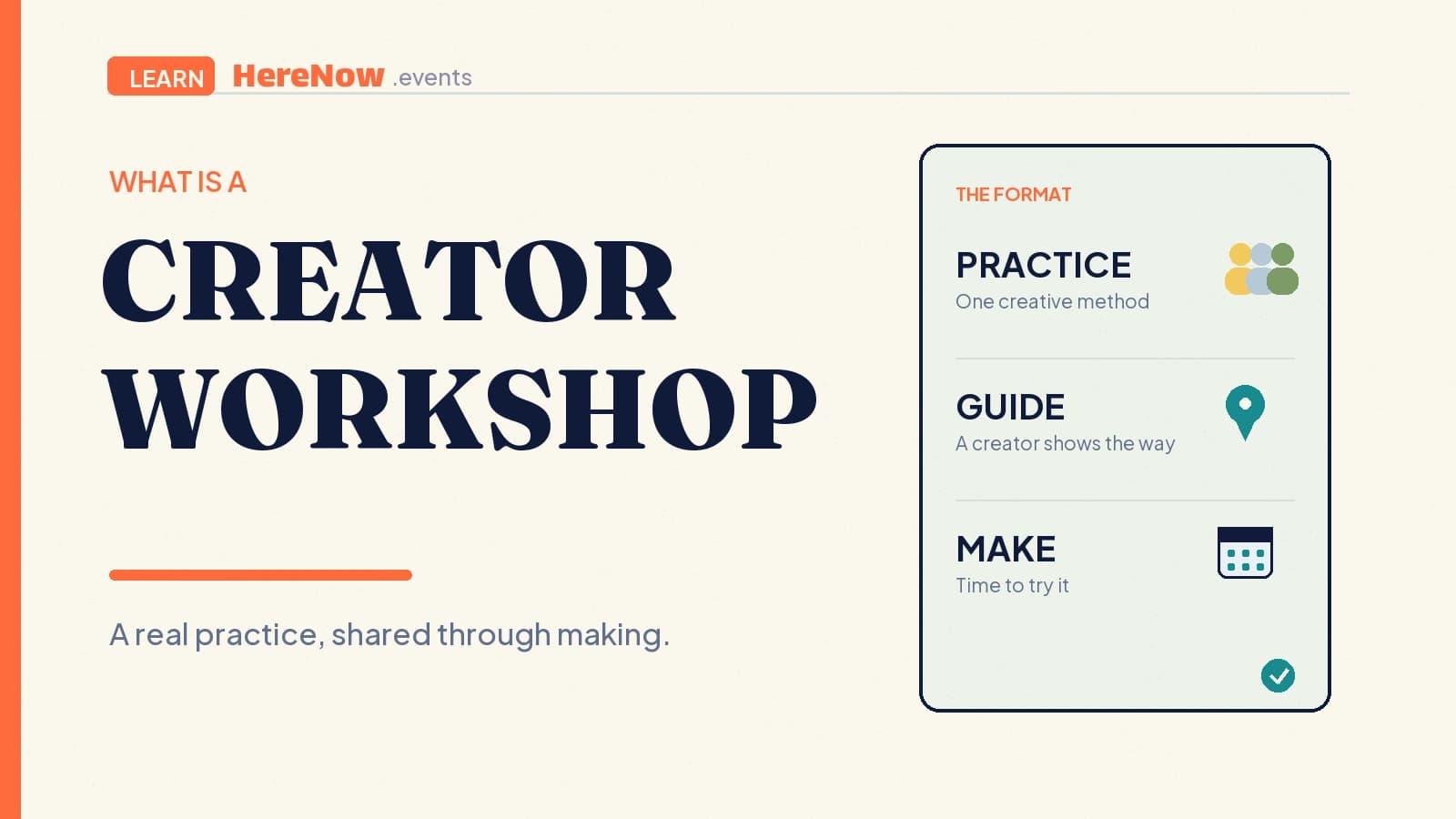
A creator workshop is a participatory learning event led by someone who makes, practises, or researches a creative craft and invites guests into part of that process. A ceramicist might guide people through a glazing technique; a photographer might lead a neighbourhood photo walk; a cook might teach one regional dish. The event is not simply a chance to watch a creator. Guests come to try, discuss, make, or reflect with clear guidance.
“Creator” can cover many kinds of practice, from illustration and music to cooking, writing, gardening, or independent publishing. What makes the format work is not an online following. It is a specific skill, method, or creative question that the host can explain honestly and build into a useful experience for the people who join.
How is it different from a demonstration or a talk?
A demonstration lets people see a process. A talk lets them hear the creator’s perspective. Both can be valuable parts of a creator workshop, but the workshop needs a guest role as well. Participants might test a tool, make a rough version, compare choices, give peer feedback, or ask questions while they work. The goal is a shared learning moment, not a performance with a few questions at the end.
The University of Kansas Community Tool Box describes workshops as participatory and time-limited, often giving people a chance to practise practical skills or techniques. That is a strong starting point for a creator: show enough of your own approach to orient guests, then protect time for them to do something with it.
Choose one slice of your practice
A creator workshop is clearer when it focuses on one manageable slice rather than trying to cover a whole career or discipline. “Make your first lino-print postcard” is more useful than “learn printmaking.” “Edit three food photos for warm window light” gives guests a better decision than “photography masterclass.” The host can still share context and stories, but the invitation should name what participants will actually explore.
- Outcome: one realistic thing guests will make, practise, notice, or understand.
- Method: the demonstration, prompt, tools, or feedback that takes them there.
- Materials: what is included, what guests should bring, and any prior experience that helps.
University of Maryland Extension’s workshop-planning guidance connects learning objectives with time, materials, teaching methods, and evaluation. A creator does not need an academic curriculum; the useful habit is to let the promise decide the plan, rather than adding activities after the page is already written.
An illustrative collage workshop
Imagine an independent collage artist hosting a 90-minute “Build a tiny travel collage” session for beginners. The page says that guests will choose a memory or imagined destination, learn the artist’s three-step layering approach, and leave with one small composition. It lists the papers and adhesive provided, asks guests to bring a printed image if they want to use one, and explains that cutting tools will be available at shared tables.
The artist opens with a brief look at their own sketchbook, demonstrates the first layer, then gives everyone time to work while offering focused feedback. The final ten minutes are for a voluntary table share and clean-up. This is not a promise that guests will make professional art. It is a well-scoped first encounter with one real process, shaped by someone who uses it in their practice.
Write the page for a first-time guest
A creator’s familiarity with the craft can hide the questions a newcomer needs answered. Use an event page to state the level, duration, location or online access, materials, pricing or RSVP terms, and what happens during the session. If an activity involves an unusual tool, mess, physical movement, or time to dry, bake, or develop work, say so plainly. Guests should not have to send a message to learn the basics.
Plan for different ways to participate. Oxford’s teaching guidance recommends building active contribution into a session and recognising that people bring different prior experience and confidence. For a creator workshop, that can mean an optional prompt, pair work, quiet making time, and more than one way to ask a question. A thoughtful registration path can also ask only for the practical information you need to prepare.
Turn one session into a host practice
Keep the structure that worked: the opening example, materials checklist, timed activity, closing reflection, and notes on what guests asked. The University of Manchester’s workshop-planning tool begins by asking about the focus, likely participants, and stakeholders, then includes room to record and share outputs. That sequence is a useful reminder to plan for both the live session and what people take from it.
On HereNow, a creator can start from an editable event template, make the workshop details visible, and refine the format after each run. When the invitation describes a real, joinable experience, browse workshop templates and adapt one to your own practice.
Frequently asked questions
Do I need to be a full-time creator to host a creator workshop?
No. The important question is whether you can guide the specific activity responsibly and describe your experience honestly. A hobbyist gardener, baker, or illustrator can lead a small session around a practice they know well. Keep the scope matched to what you can demonstrate, support, and answer during the time guests have joined.
Should guests leave with a finished piece?
Not necessarily. A finished object can be a good outcome for some making sessions, but a draft, technique, set of notes, or clearer understanding can also be worthwhile. State the likely outcome accurately. If work needs drying, firing, editing, or another later step, explain what happens after the workshop before guests register.
Can a creator workshop be online?
Yes, if the page makes the practical set-up clear. Tell guests which materials to prepare, how they will see demonstrations, whether they can share work for feedback, and what time zone applies. A focused activity usually translates better than trying to reproduce every aspect of a studio session through a screen.