What is an AI event description generator?
An AI event description generator turns confirmed event details into an editable invitation draft, while the host verifies facts, tone, and every guest-facing promise.
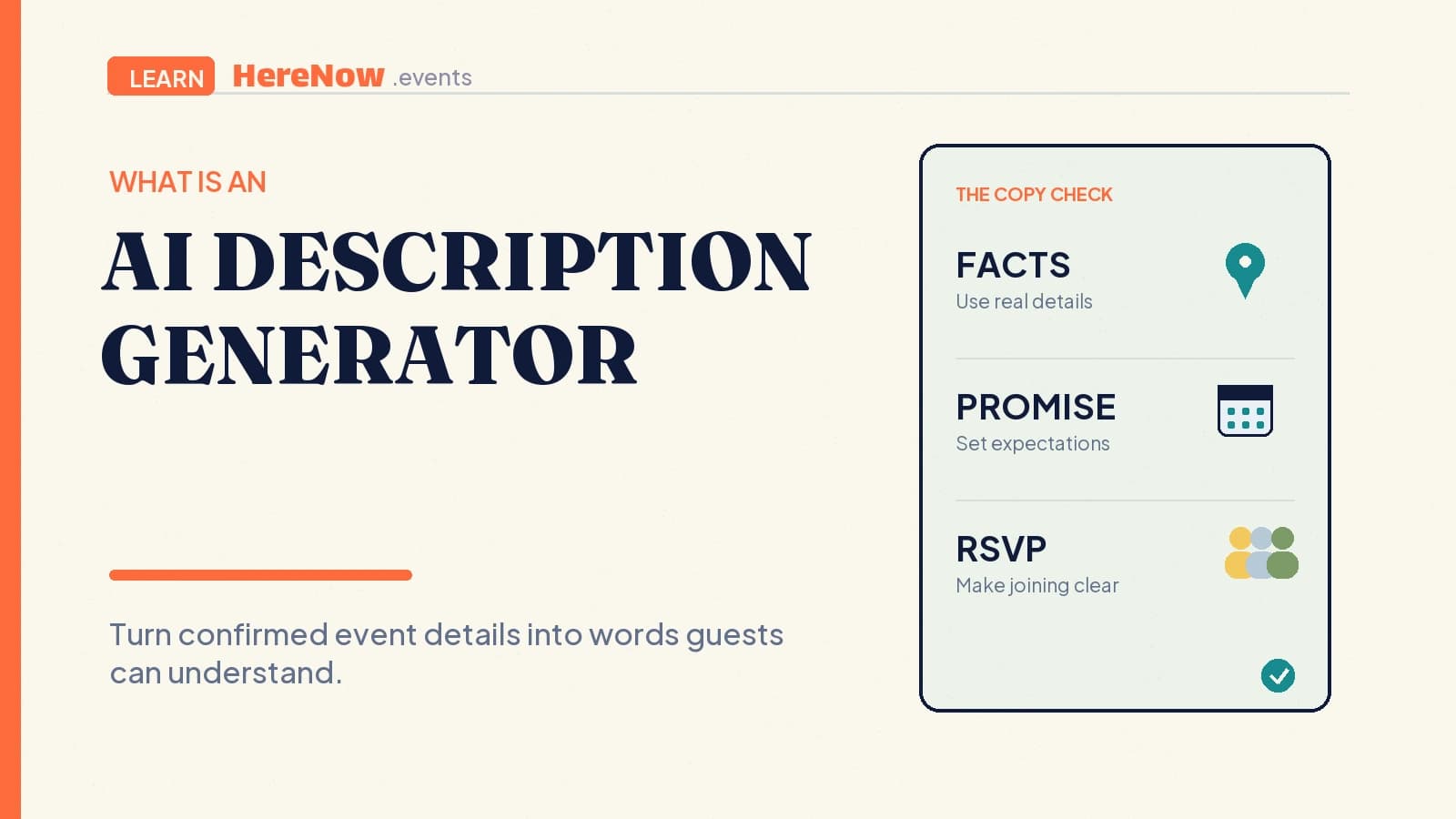
An AI event description generator is a writing tool that turns confirmed event details into a first draft of the words guests read before they RSVP. It can help a host explain what is happening, who it is for, and what someone should expect. It does not verify the details or decide what to promise. The host supplies the facts, checks the tone and accuracy, and publishes only the description that matches the real event.
A description is a guest decision aid
An event description is not just promotional copy. For a potential guest, it answers a quiet set of questions: Is this for someone like me? What will we actually do? Do I need experience or materials? Is the atmosphere formal, social, focused, or family-friendly? What happens after I press RSVP?
An AI generator gives the host a faster first pass at those answers. Instead of staring at a blank text field, a host can begin with a short factual brief and receive language to edit. That makes it especially useful for a first workshop, a recurring club, or a small community event where the host knows the experience well but has not yet found a clear way to describe it.
The goal is not to make every invitation sound dramatic. It is to make the right expectations easy to understand. A strong description helps the right guest say yes and helps an unsure guest make an informed no.
What an AI description generator can do
With enough real context, the tool can shape a readable first draft, suggest a shorter summary, reorganize an existing description, expand a thin paragraph, or translate approved copy while preserving its meaning. In HereNow’s editor, AI copy tools can help rewrite, expand, or translate event-page text; the broader AI event creation workflow can also begin a full event draft from an idea or source material.
These actions are useful when they protect the core message while changing its presentation. A host might ask for a warmer introduction to a beginner dance class, a shorter version for a quick RSVP decision, or a clearer translation for an international language exchange. The assistant can offer wording; the host decides whether that wording is true, inclusive, and appropriate for the event.
Give it facts before asking for flair
The quality of a description starts with the brief. Before generating, gather the details a guest would need to act on:
- Purpose: what people will do and what the gathering is trying to create.
- Audience: who will feel at home, including experience level or age guidance when relevant.
- Practical facts: date, time, place, duration, price, capacity, materials, and access needs.
- Next step: what a guest should bring, prepare, or do to register.
Facts first makes the final writing more useful and gives the host an easy review checklist. It also prevents a common failure mode: a polished paragraph that vaguely promises “an unforgettable evening” but leaves people unsure whether to bring a laptop, buy a ticket, or meet at the correct entrance.
Clarity benefits more than conversion. W3C’s web-writing guidance recommends short, clear sentences and paragraphs, meaningful structure, and simple language appropriate to the context. Its accessibility writing tips provide a good editorial standard for event pages. US Digital.gov similarly frames plain language around the specific audience and recommends short sections and active voice. Its guidance on writing for understanding is a useful lens when revising a generated draft.
Run an honesty pass before publishing
AI can write confidently about details that were never supplied. Review the generated copy line by line and flag anything that sounds specific but has not been confirmed: a host credential, a promised outcome, an agenda item, a menu detail, an accessibility feature, or a refund policy. Remove it, replace it with a fact, or ask the person responsible.
This is a practical response to a documented limitation of generative systems. NIST describes “confabulation” as the production of erroneous, false, or internally inconsistent content that can be presented with confidence. Its Generative AI Profile is a clear reason not to treat fluent event copy as verified event information.
Keep the host visibly accountable for the final invitation. The OECD AI Principles call for human agency and oversight, alongside transparent information about AI capabilities and limitations. That framework fits a simple hosting practice: accept useful phrasing, but retain the judgment to change, challenge, or discard it.
Illustrative example: a beginner bread class
Leila is hosting a Saturday bread-making class for ten beginners. Her starting facts are modest: a two-hour session, a shared kitchen, ingredients included, and a request that guests bring a container home. The first AI draft gives her an inviting introduction and a suggested outline. It also says guests will “master sourdough,” which Leila removes because the class is an introduction, not a guarantee.
She adds the actual arrival time, the exact entrance, an allergy note, and a plain RSVP instruction. The finished description is still warm, but it is more valuable because it sets a truthful expectation: guests will mix, shape, and bake a small loaf with guidance. A guest can now decide whether the class fits their Saturday and their skill level.
Put the copy in a complete event page
A description works best alongside the practical details it refers to. A clear event page gives guests the date, place, host, RSVP path, and any limits in one shareable place. If the activity has a timed flow, connect the description to a reviewed event agenda rather than making the prose carry every detail.
When the facts are ready, generate an editable event draft in HereNow, refine the description, and preview it as someone who has never met the host. If that reader can tell what the event is, who it is for, and how to join, the copy is doing its job.
Frequently asked questions
Will an AI description generator invent details for my event?
It can produce details that sound plausible even when they are not confirmed, especially if the starting brief is vague. Give it concrete facts and review every statement that affects a guest’s decision. Do not publish assumed prices, dates, credentials, accessibility features, capacity, or promised outcomes as though they were verified.
Should I use the generated copy exactly as written?
Usually no. Treat it as a strong starting point. Keep any language that is accurate and sounds like the host, then rewrite generic phrases, remove overpromises, and add local context. The finished description should be recognizably yours and useful to a person deciding whether to attend.
Can I use AI to translate an event description?
AI can help create a translation draft, but names, location instructions, cultural references, accessibility information, and registration requirements still deserve a careful review by someone who understands the language and the event. Preserve the facts and test whether the call to action remains clear in the translated version.