Event page vs landing page
An event page is the reliable home for one gathering; a landing page is the campaign destination that guides a visitor toward one focused action.
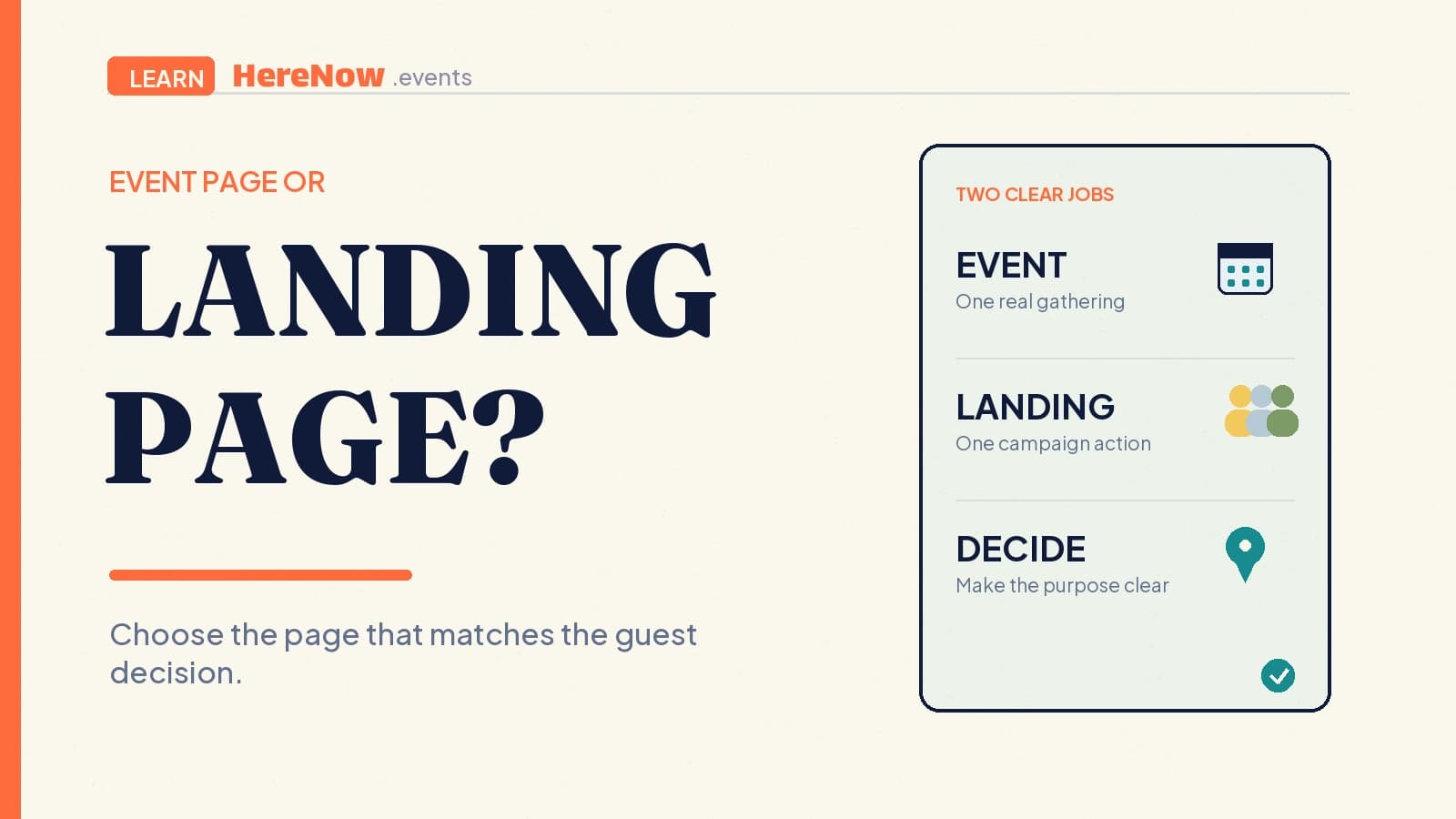
An event page and a landing page can be the same URL, but they do different jobs. An event page is the dependable home for one specific gathering: it helps a guest understand the event and decide whether to RSVP, register, or buy a ticket. A landing page is the page a visitor reaches from a particular campaign or promotion. Use an event page for a confirmed event and a landing page for a campaign action.
The difference in one sentence
A landing page is defined by its entry point and campaign purpose. Google Ads describes it as the web page people reach after clicking an ad, and emphasises that the page should meet the expectations created by that click. An official Google Ads definition is useful here because it keeps the term practical: landing pages are destinations for a chosen traffic source.
An event page is defined by the event itself. It remains useful whether someone finds it through a friend, an email, a search result, a social post, or a calendar link. For public event listings, Google’s event guidance calls for a unique URL focused on one event and accurate information about its name, date, and location. In short, a landing page begins with the campaign; an event page begins with the guest’s decision about a real gathering.
Start with the visitor’s job
Think about what the visitor needs to do next. Someone arriving on an event page may ask: What is this? Is it for me? When and where is it? What happens there? Who is hosting? How do I join? The page should make those answers easy to find, even if the guest has never seen the original invitation.
Someone arriving on a landing page may have a narrower task: claim an early invitation, join a waitlist for a future series, download a host checklist, or respond to a particular campaign. That page can be tightly shaped around one message and one next step. It may use a short deadline, a focused story, or a single form, as long as it clearly explains the purpose. The W3C guidance on clear page purpose recommends a title or heading that tells people what the page is for. That principle helps both page types.
What belongs on each page
The distinction becomes easier when you compare the information each page must protect. A strong event page can include campaign language, but it should never hide the facts a guest needs to attend.
Question Event page Landing page What is it about? One named, time-bound gathering. One campaign, offer, or visitor action. What must stay current? Date, time, location, format, availability, and joining details. The message, audience fit, and the action promised by the campaign. What is the main action? RSVP, register, join a waitlist, or purchase a ticket. Complete the single campaign goal, which may or may not be event registration. How long should it work? From sharing through arrival, updates, and any post-event reference. For the life of the campaign or a clearly defined promotion.When structured data is appropriate, the Schema.org Event vocabulary reflects this event-specific focus with properties for the name, start time, location, organiser, and offer. That does not make every promotional page an event page. It simply reinforces why a guest-facing event page needs concrete event details.
When one page can serve both jobs
For a small workshop, it is often sensible to use one page as both the campaign destination and the event page. A host can lead with a memorable promise—“Make your first hand-thrown bowl in one relaxed afternoon”—and then give the date, studio address, materials list, capacity, host introduction, and registration action below. The campaign message draws the right person in; the event information helps them make a sound decision.
The risk comes when the campaign layer takes over. A page full of urgency but missing the end time, venue access, or who the workshop is for may earn attention while leaving guests uncertain. Keep the single event’s facts stable and visible. If several campaigns point to the page, make sure they all describe the same offer, price, and practical details. One page can have two jobs only when it gives neither job second-class treatment.
An illustrative supper-club example
Ravi is testing a monthly vegetarian supper club. His first campaign message says, “A long-table dinner for people who miss unhurried conversation.” That message can link to a landing page asking people to join an interest list before a date is set. At that stage, the purpose is to learn who wants a future gathering, so a focused list-signup page is enough.
Once Ravi chooses a date, restaurant, menu boundary, and seat count, he needs an event page. It should explain the exact evening: Thursday at 7pm, the neighbourhood and meeting point, the shared-menu approach, the ticket price, dietary request deadline, and the RSVP path. He can still reuse the campaign’s warm opening, but now guests are deciding about this dinner, not a possible future idea. After the event, Ravi can retain the useful structure and update it for the next date.
Choose before you design
Use this three-question check before making a page. First, can a person who never saw the campaign still understand and join a specific event? If yes, build an event page. Second, is the page trying to achieve one temporary campaign action rather than explain a confirmed gathering? If yes, use a landing page. Third, are both true? Use one page, but put the event facts in a consistent, scannable order and let the campaign copy introduce them rather than obscure them.
For practical page-writing help, read how to write an event page and how to create an event agenda. When a confirmed idea is ready for a guest-facing draft, create an event with HereNow and edit the details before you share the link.
Frequently Asked Questions
Can an event page also be a landing page?
Yes. A single page can welcome people from a campaign and give them everything they need to join one event. This works best when the campaign promise, event details, and registration action all describe the same gathering. Keep the date, location, price, access details, and host context easy to find so the promotional opening does not become the only information a guest sees.
Do I need a separate landing page for every event promotion?
No. A separate landing page is useful when you have a distinct pre-event goal, such as collecting interest before the date is set or offering a campaign-specific resource. If the promotion simply invites people to one confirmed event, send them to the event page. One accurate page is usually easier to update and less likely to give guests conflicting information.
Should a landing page include event details?
Include enough detail to keep the campaign honest and let visitors understand what action they are taking. If the page asks people to register for a specific event, it should include the practical facts they need to decide. If it only collects interest for a future format, say that clearly rather than presenting provisional details as if the event were already confirmed.