What is a sound bath event?
A clear definition of a sound bath event, how to set guest expectations, and why hosts should avoid health claims.
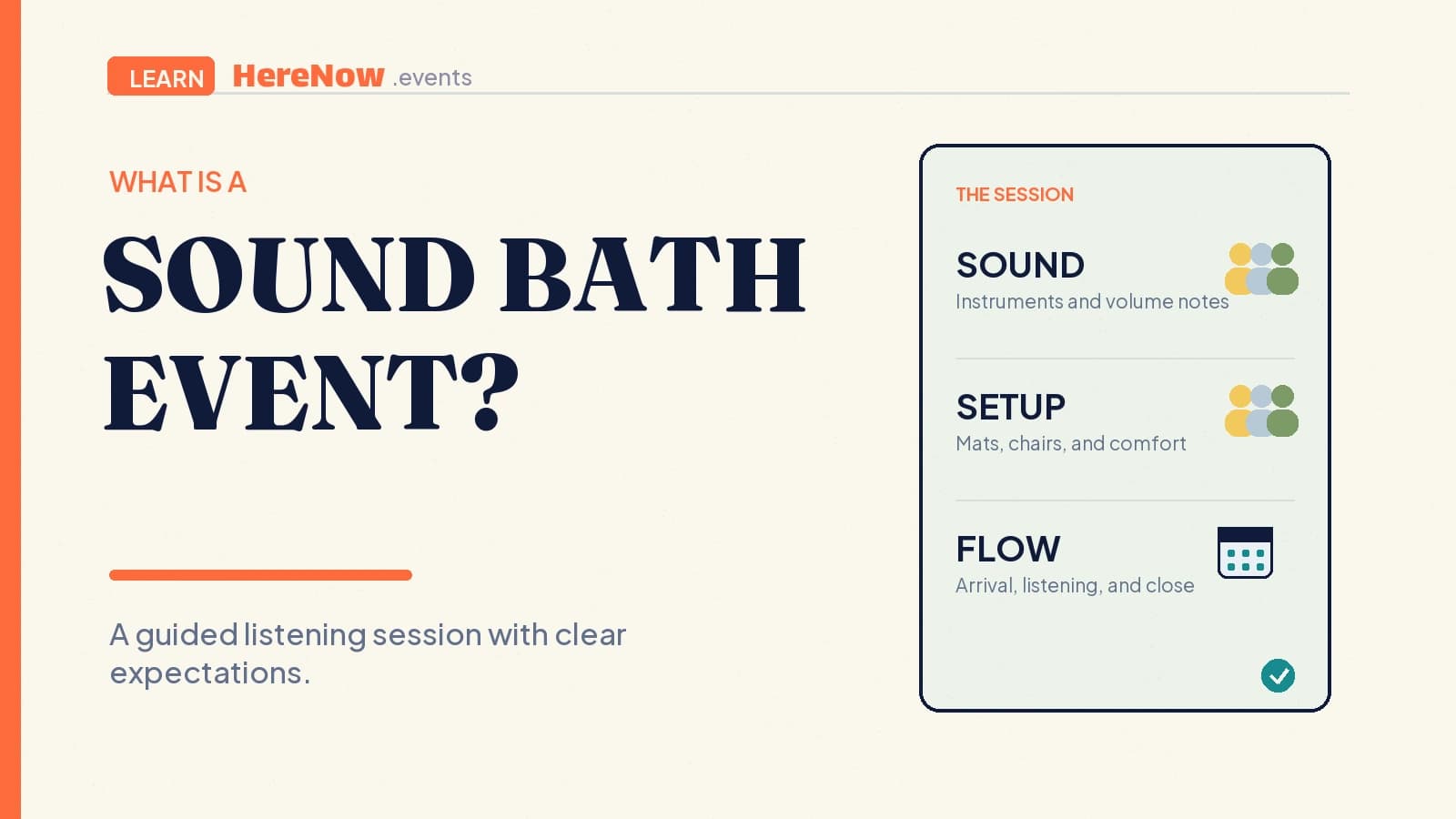
A sound bath event is a guided group listening session in which participants sit or lie comfortably while a facilitator creates an extended soundscape with instruments such as singing bowls, gongs, chimes, drums, or voice. It is usually quieter and less conversational than a class or concert. The host’s job is to set clear expectations for the room, the sound, the duration, and what guests need to bring—not to promise a medical or therapeutic outcome.
An immersive listening format
The word “bath” describes immersion in sound, not water. A facilitator shapes sustained tones, pauses, and changes in volume while participants listen. Some sessions begin with a short arrival prompt and end with a quiet transition or tea; others are simply a continuous period of listening. Guests may lie on mats, recline in chairs, or sit upright, depending on the venue and their comfort.
Common instruments include metal or crystal bowls, gongs, chimes, drums, tuning forks, and voice. A Cleveland Clinic overview similarly describes sound baths as immersion in deep sound vibrations and notes that session length and instruments vary. For an event host, that variety is a reason to describe the actual session rather than relying on the label alone.
What a sound bath is—and is not
A sound bath can be a calm, shared cultural or wellness activity. It is not automatically music therapy, psychotherapy, medical care, or a substitute for any of them. The American Music Therapy Association defines music therapy as clinical, evidence-based work within a therapeutic relationship by a credentialed professional. A general sound-bath listing should not use that term unless the event truly meets those professional conditions.
Keep the page free from claims to heal, treat, cure, diagnose, or guarantee a particular physical or mental result. Research into music-based interventions covers many different practices and settings; the National Center for Complementary and Integrative Health notes that evidence can vary in quality and outcome across those interventions. That evidence cannot be turned into a promise about a particular sound-bath event. Plain language is both more accurate and more welcoming: describe listening, rest, quiet, or reflection as the event experience, not as a clinical result.
Give guests a clear picture before they register
A guest needs practical information to decide whether the environment will suit them. Use an event page to state the start and end time, venue, seating or lying-down options, approximate sound level, session structure, and whether conversation is expected. Explain whether guests should bring a mat, blanket, water, cushion, or headphones—and say what the venue provides.
- Arrival: When doors open, whether late entry is possible, and where people should put shoes and phones.
- Setup: Floor mats, chairs, blankets, accessible seating, and the amount of personal space available.
- Sound: The instruments, approximate volume character, and whether guests may step out quietly.
- Close: How the session ends and whether there is time for tea, questions, or a silent departure.
A Cornell sound-bath event listing is a useful example of operational detail: it specifies the instruments, mat guidance, late-entry policy, capacity, and room. Your event may be simpler, but the same principle applies: the details that affect comfort belong before RSVP, not in a last-minute message.
Decide who the page is for before sharing it. A public listing can welcome new guests, while an invite-only gathering may need a link shared with a known circle. The choice of event visibility should match the room capacity and the invitation you actually want to make.
Plan for comfort, access, and sound
Visit the room before publishing the event. Check floor cleanliness, ventilation, temperature, lighting, entrance noise, nearby traffic, and the route to a restroom. Decide whether chairs are available for guests who do not want to lie down and leave clear paths for arrivals and exits. A smaller capacity can be kinder than filling every available square metre.
Sound is part of the setting, so introduce it thoughtfully. State that the event may include sustained or resonant tones and give people an easy way to step outside. The NCCIH notes that listening at excessive volume can contribute to noise-induced hearing loss, and that music can prompt strong memories or emotional reactions for some people. Those general safety observations are not a reason to make clinical claims; they are a reason to avoid surprise, respect personal choice, and run the session at an appropriate volume for the space.
A small, clear first event
Consider Lin’s first sound bath in a neighbourhood studio. She caps the session at twelve, opens doors fifteen minutes early, offers eight floor mats and four chairs, and asks guests to bring a blanket if they tend to get cold. Her page says there will be bowls, a gong, and chimes; phones stay silent; late entry is not available after the opening; and guests may leave the room quietly if they need to. After forty-five minutes of sound, there is a ten-minute transition and optional tea.
Nothing in Lin’s invitation claims a health outcome. Yet guests know exactly what they are agreeing to, what they need to bring, and how the evening will feel. That is a better guest decision than a vague promise of transformation.
Make the format repeatable
After each session, review a few concrete points: Did people find the entrance? Were enough mats and chairs available? Was the room too warm, too bright, or too loud? Did the late-arrival policy work? Keep those answers with the event notes so the next listing starts from a better baseline.
On HereNow, the Phone-Off Sound Bath template gives hosts an editable starting point for quiet setup, what to bring, late-arrival expectations, and a gentle close. Update the page for the real venue and facilitator each time, then give guests a straightforward registration path.
Frequently asked questions
Do guests have to lie down at a sound bath?
No. Some people prefer a mat, while others are more comfortable in a chair or seated against a wall. Hosts should state the available options before registration and provide accessible seating where possible. Guests should choose the position that feels right for them rather than feeling pressured to copy everyone else.
What should guests bring to a sound bath event?
That depends on the venue. A host should say whether mats, blankets, cushions, or water are supplied. If people are lying on a floor, a mat and an extra layer may improve comfort. Guests should also know the phone policy, entry time, and whether shoes stay on or off in the room.
Can a sound bath be advertised as therapy?
Only use clinical or therapeutic language when it accurately describes the professional service being offered and the facilitator’s credentials. For a general hosted listening session, describe the instruments, setting, and experience instead. Do not promise treatment, diagnosis, healing, or a guaranteed emotional or physical result.