How to Sell Tickets for a Small Event Without Sounding Pushy
A promotion guide for selling tickets with useful invitations, honest urgency, social proof, and checkout clarity.
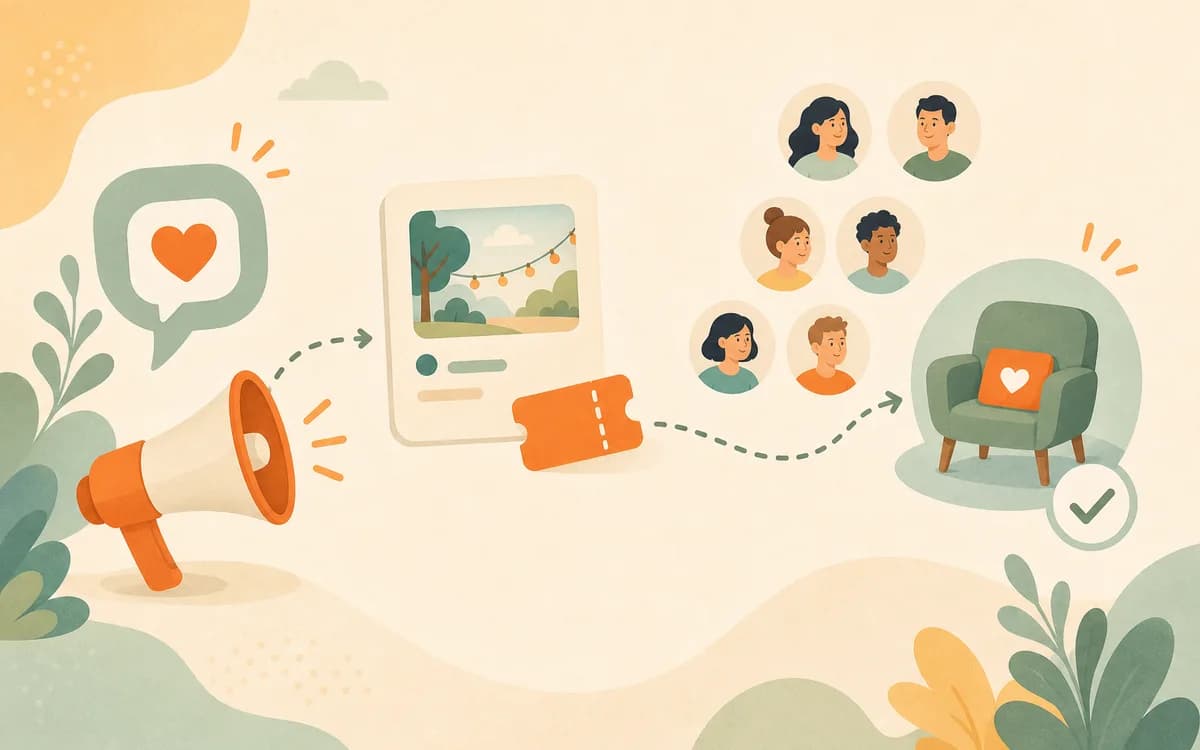
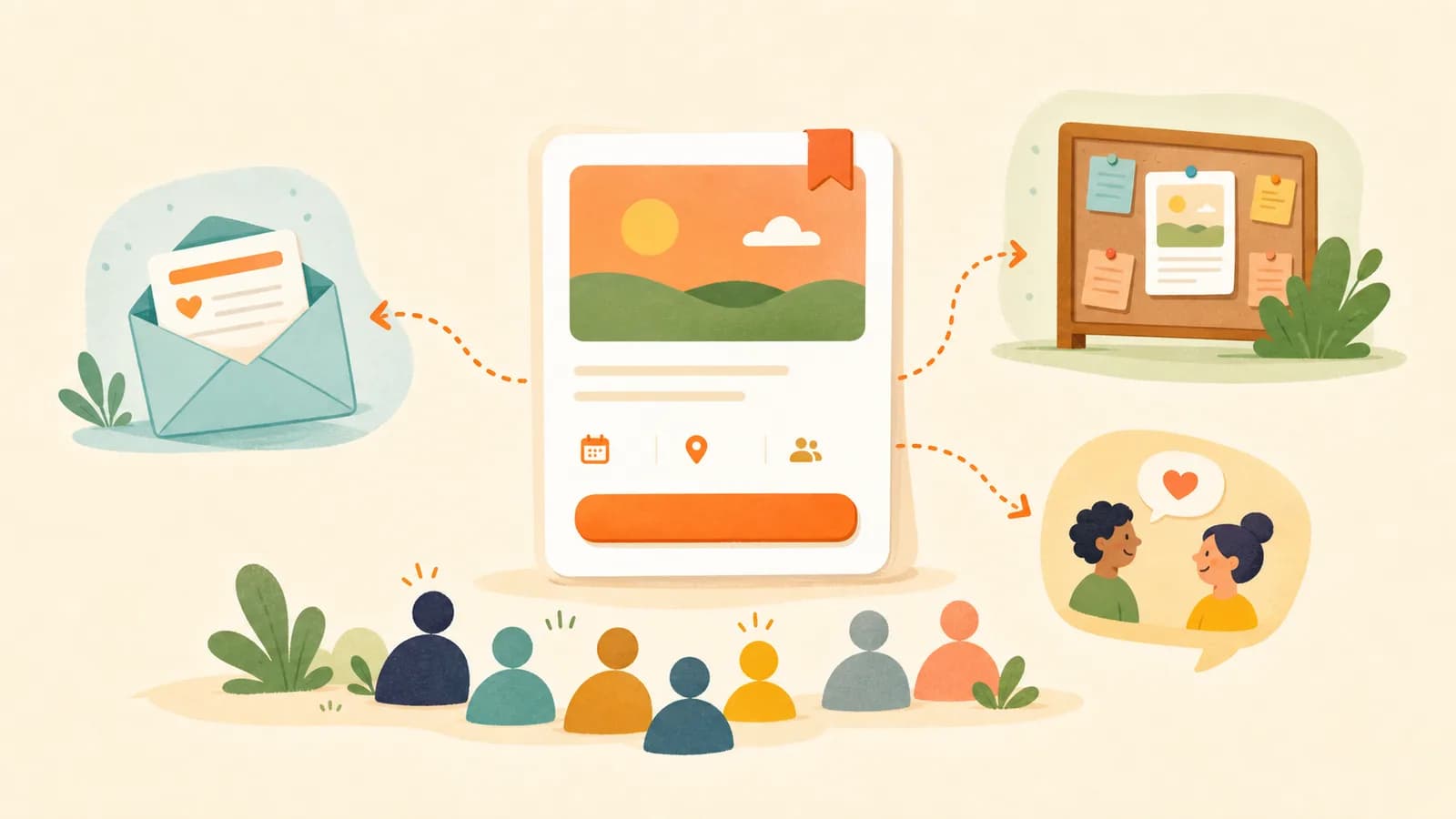
Sell tickets for a small event without sounding pushy by making the invitation useful, specific, and easy to act on. Pushiness usually appears when the offer is vague and the message tries to create pressure. A better approach is calmer: show who the event is for, what happens, what the ticket includes, why the timing matters, and what the next step is.
Small events have an advantage here. You are not selling a faceless product. You are inviting people into a workshop, dinner, class, circle, walk, tasting, performance, or shared room. The message can feel human and direct when the event page carries the details and the promotion points people to the right next step.
Key Takeaways
- Pushy promotion often comes from a weak offer page, not from selling itself.
- Lead with audience fit, concrete outcome, inclusions, and a real reason to act.
- Use honest deadlines and capacity limits instead of vague urgency.
- Make every message easy to forward to someone who has no private context.
- Use testimonials, partnerships, and email follow-up with clear disclosure and respectful expectations.
Start With a Useful Invitation, Not Pressure
The best small-event sales message feels like a useful invitation. It helps the right person understand whether the event fits them. It does not try to make everyone feel late, guilty, or foolish for not buying. This distinction matters because your audience may include friends, past attendees, local community members, professional contacts, and people who are still deciding whether they trust you as a host.
Use this basic posture:
For [specific person], I am hosting [specific event] where we will [specific activity or outcome]. The ticket includes [specific value]. Reserve by [real deadline] because [real operational reason].
That sentence sells by reducing uncertainty. It is clear enough to use in an email, social post, direct message, or event page preview.
Name who it is for before asking people to buy
A message sounds less pushy when it gives people permission to opt in or out. "This is for complete beginners who want a relaxed Saturday craft session" is warmer than "Everyone should come." Audience fit helps people self-select. It also makes referrals easier because a friend can think, "This sounds like Mia," instead of forwarding a generic promotion. Be specific about level, mood, and goal: first-timers, solo attendees, parents with teens, founders testing a pitch, locals who want a low-pressure dinner, or experienced makers who want studio time with guidance. The clearer the fit, the less the message needs to persuade people who were never likely to enjoy the room.
Explain the next step, not every detail
A sales message does not need to contain the whole event page. Its job is to create enough clarity for the reader to click, reply, or forward. If the message tries to include full biography, agenda, venue policy, materials, pricing, parking, and every FAQ, it can feel heavy. Put the full detail on the event page. In the message, focus on the decision trigger: who it is for, what they will do, what is included, and the next action. This keeps the tone practical rather than forceful. A focused message also respects the reader's time, which is one of the easiest ways to make selling feel more considerate.
Strengthen the Page Before You Promote
If the page is unclear, every promotion message has to work too hard. That is when hosts start adding hype: "You do not want to miss this," "life-changing," "limited time," or "only for serious people." The cleaner fix is to improve the page so the link answers buyer questions on its own.
Nielsen Norman Group's article on how users read on the web is especially relevant for event promotion. People scan before they commit. They look for headings, concrete details, and reasons to keep reading. Digital.gov's plain language guidance supports the same habit: write so people can find and use information quickly.
A weak page makes messages sound desperate
Before posting again, ask whether the page clearly shows the outcome, inclusions, host context, agenda, level, price, capacity, location, arrival details, and FAQ. If not, the next message will need to explain too much or rely on pressure. A strong page lets you write lighter promotion: "I opened 12 seats for a beginner pasta workshop next Friday. The page has the menu, timing, and what is included." That sounds confident because the page can support the claim. It also gives the reader control over the decision. When buyers can inspect the details themselves, the host does not have to keep insisting that the event is worth it.
Make messages forwardable
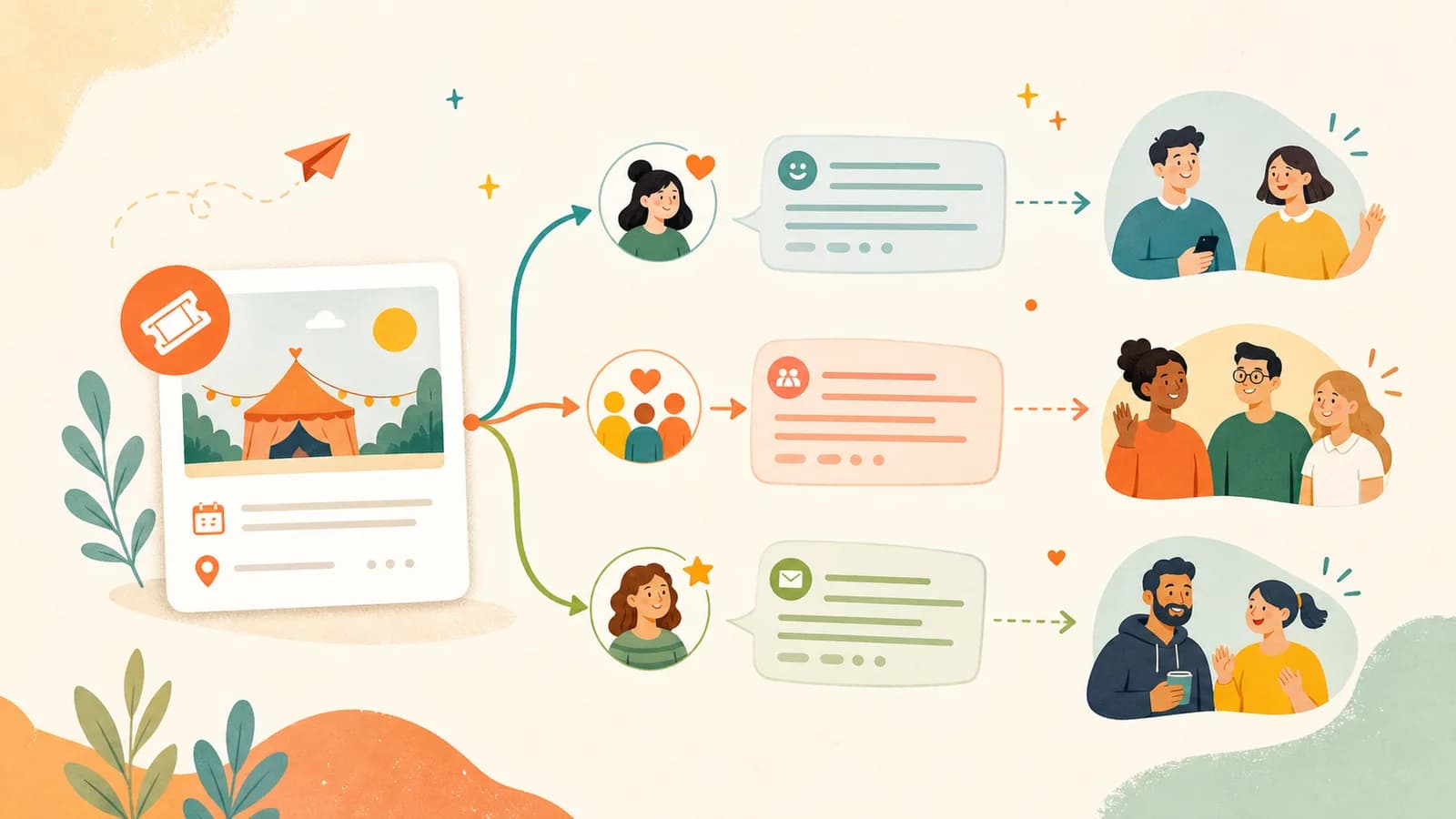
A forwardable message makes sense to someone who does not know the backstory. Include the event title, date or timing, city or online format, who it is for, what the ticket includes, and the link. Avoid private references like "the thing I mentioned" unless you are writing one-to-one. Forwardability matters because small events often grow through trust networks. A past attendee may forward your invite to a friend, but only if the message gives that friend enough context to judge the fit without asking five follow-up questions. Write as if the second reader is the real buyer.
Use Honest Urgency
Urgency is not automatically manipulative. Small events often have real time pressure: a materials order, venue headcount, food planning, room capacity, or the need to prepare name tags and seating. The problem is not urgency. The problem is urgency without a reason.
| Instead of | Say | Why it works |
|---|---|---|
| "Do not miss out!" | "I am ordering materials on Wednesday, so please reserve by Tuesday night." | The deadline is real and useful. |
| "Only serious people should join." | "This is designed for beginners who want hands-on help in a small group." | The fit is clear without shaming anyone. |
| "Seats are disappearing fast." | "I am capping this at 10 guests so everyone gets feedback." | The capacity explains the experience. |
| "This will change your life." | "You will leave with two finished candles and a scent formula you can reuse." | The outcome is concrete and believable. |
Deadlines should come from operations
The most trustworthy deadline is one that helps the event run well. "Reserve by Monday so I can confirm the table count" is better than "sale ends soon" because it tells the reader why timing matters. Operational deadlines also help you host better. They give you time to buy supplies, prepare seating, send arrival details, handle accessibility requests, and avoid scrambling. If you do not have a real deadline, create one only when it is connected to a real planning need, not because the message feels more dramatic. The deadline should make the event more reliable, not merely make the message louder.
Scarcity should come from capacity, materials, or support
Limited seats are a strong message when the reason benefits the guest. A workshop capped at 12 because everyone receives individual feedback is a value statement. A dinner capped at 14 because the room works best for conversation is a design choice. A walking tour capped at 20 because of audibility and group movement is a quality decision. If capacity is limited, explain the guest-facing reason. That makes the limit feel like care, not pressure. It also prevents the awkwardness of vague scarcity claims that buyers may not believe. Real capacity language tells people what kind of room they are choosing.
Follow Up Without Wearing Out Trust
Most people do not buy the first time they see an event. They may need to check a calendar, ask a friend, review the venue, or wait for payday. Follow-up is normal. The key is to make follow-up useful rather than repetitive.
A simple sequence can work:
- Announcement: what the event is, who it is for, and why it is worth considering.
- Value reminder: show inclusions, agenda, or a behind-the-scenes preparation detail.
- Deadline reminder: explain the real cutoff for materials, capacity, or planning.
- Final practical note: share remaining seats or answer a common question.
If you promote by email, use care. The FTC's CAN-SPAM compliance guide explains requirements for commercial email such as accurate header information, non-deceptive subject lines, identifying the message as an ad when needed, and honoring opt-out requests. This is not a substitute for legal advice, but it is a useful reminder that respectful promotion includes truthful routing, clear identity, and a way not to receive future marketing.
Use Social Proof Carefully
Social proof can make a small event feel safer, especially when the host is new to the buyer. But weak or unclear social proof can backfire. Use real signals: a short quote from a past attendee, a photo of previous work, a host credential, a partner venue, a clear collaborator, or a recap from a previous session.
The FTC's Endorsement Guides FAQ explains that material connections should be disclosed when they might affect how people evaluate an endorsement. In small-event language, that means a quote from a close friend, sponsor, venue partner, or paid collaborator should not pretend to be a neutral customer review. Keep testimonials specific and honest. "I felt comfortable trying pottery for the first time" is stronger than "best night ever" because it tells future guests what kind of experience to expect.
Respect the Buyer at Checkout
A calm sales message can still lose trust if checkout introduces surprise fees, unclear refund terms, or a registration form that asks for more than the event needs. The FTC's unfair or deceptive fees FAQ is a useful signal for hosts: mandatory costs should be clear before the buyer is deep in the process. If your ticket has taxes, fees, refund limits, or transfer rules, make them easy to find.
Registration questions should also feel relevant. The W3C's tutorial on form instructions recommends clear labels and instructions so people understand what is required. If you ask for dietary restrictions, accessibility requests, experience level, or a phone number for day-of contact, explain the reason briefly. Trust is built in small moments.
Build the Ticket Path in HereNow
HereNow gives you a single link for the event promise, ticket details, agenda, capacity, registration questions, and FAQ. That makes promotion simpler. Instead of writing a long pitch every time, you can send a concise invitation and let the page answer the deeper buyer questions.
Before promoting, strengthen the page with What to Include on an Event Page Before Someone Buys, check the price with How to Price a Small In-Person Event, and make the offer clearer with How to Increase the Perceived Value of an Event Ticket. The better the page, the less your messages need to push.
Create your event page with HereNow
FAQ
How many times should I promote a small event?
Promote enough times that people can notice, decide, and act, but change the angle each time. One message can announce the event, another can show what is included, another can explain the deadline, and another can answer a common question. Repeating the same pressure line is what makes promotion feel tiring.
Is direct messaging people too pushy?
It depends on the relationship and the relevance. A thoughtful one-to-one message to someone who has shown interest can feel helpful. A mass message that ignores fit can feel intrusive. Keep it short, make the relevance clear, and avoid guilt. Give people an easy way to say no or simply not respond.
Should I offer discounts if tickets are slow?
Not as the first move. Discounts can train people to wait and may create unfairness for early buyers. First improve the page, clarify the offer, explain what is included, and promote to a more relevant audience. If you do discount, make the reason clear, such as a student ticket, community ticket, or friend bundle.
What should I say when only a few seats remain?
Say it plainly and connect it to the event design. "There are 3 seats left in the 10-person workshop" is enough. If the capacity is small because of materials, venue size, safety, or individual feedback, include that reason. Avoid dramatizing the message beyond what is true.