What is a waitlist conversion?
A waitlist conversion happens when a waiting guest becomes confirmed after a place opens. Learn what completes the conversion and how to make the handoff fair and clear.
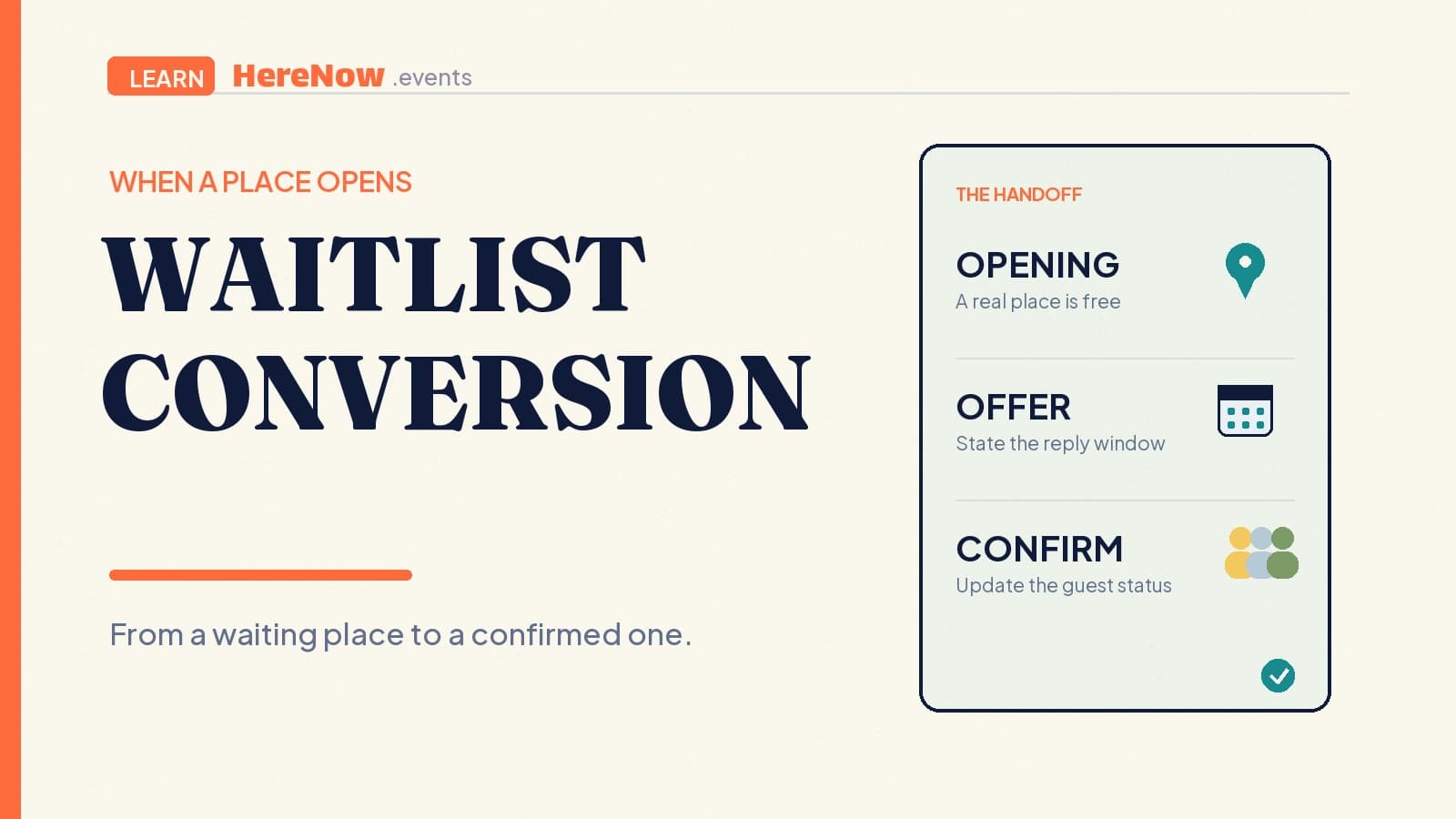
A waitlist conversion is the moment a person on an event waitlist becomes a confirmed attendee after a place opens. The conversion may happen automatically or after the guest accepts an offer, but it is complete only when the guest’s status changes from waiting to confirmed. A notification alone is not a conversion; it is an invitation to take the next step.
The short answer
- A waitlist conversion begins with an open place. Someone cancels, declines, or the host can safely add capacity.
- The right guest receives an offer. The order or eligibility rule should be decided before the waitlist begins.
- The guest must meet the offer terms. They may need to reply, complete registration, or make payment by a stated deadline.
- Confirmation completes the conversion. Only then should the host count the person as attending and update the available capacity.
For a small event, a clear conversion process keeps a scarce place moving without treating waitlisted guests as though they already have a seat. It creates a simple promise: if a place becomes available, the host will offer it fairly and tell the guest exactly what to do.
What changes when a guest converts
Before conversion, a guest is waitlisted: interested, but not confirmed. After conversion, they have a reserved place and should receive the same essentials as other confirmed guests, including the event date, time, location or access details, and any action needed before arrival.
Some systems automatically move the next eligible person into an open place; others hold it while the guest accepts. University of Colorado Boulder describes automatic enrollment of the first eligible person when someone leaves, followed by an email confirmation. Its registrar guidance illustrates the distinction: a waitlisted person is not enrolled; a converted person is.
“A place is available. Reply by 6 p.m. tomorrow to confirm it” is an offer. “You’re confirmed for Thursday’s supper club” is a completed conversion. Keep the terms separate so nobody makes travel plans on a maybe.
The handoff from waitlist to confirmed
A dependable process has four steps. Verify that a real place is available within capacity. Select the next guest using the published order or eligibility rule. Send an offer that names the event, deadline, and way to accept or decline. Update the guest to confirmed only after the required action is complete.
Harrisburg Area Community College sends the next person an email with a stated window to claim an open place; failing to act ends the opportunity. Its waitlist instructions show why small hosts need a deadline: one unresponsive guest should not hold an opening.
A conversion is complete only when the status changes
Keep three moments distinct in your guest list: an opening exists, an offer was sent, and a place was accepted. Do not count an offer as filled capacity or remove the next person until the previous offer is accepted, declined, or expires. Record the offer time, reply deadline, and final result. This prevents double-booking and gives every guest one truthful message.
What a waitlist conversion is not
A conversion is not an invitation to show up and hope for a spare chair. It is not an automatic promise that every waitlisted person will attend. And it is not just opening a message or clicking an interest button. The guest needs to reach the confirmed state defined by the host’s event process.
Missouri State’s registrar explains that a waitlisted student receives a limited time to register after a seat becomes available; if they do not act, the next person is notified. That sequence is useful for events because it separates an offer from an accepted place. A host should not skip over a waiting guest without the rule allowing it, nor assume a silent guest accepted the offer.
The phrase can also describe a count, such as the number of guests who moved from waiting to confirmed. If you track it, define it plainly and count only completed status changes. Do not use the number to pressure guests; use it to understand whether your offer window, timing, and capacity decisions are workable.
Example: a ten-person floral workshop
A florist is holding a ten-person spring arrangement workshop. Ten guests are confirmed, and four people are waiting. On Wednesday, one confirmed guest cancels. The host checks that the materials can still support a tenth participant, then emails the first waitlisted guest: “A place has opened for Saturday’s workshop. Reply by 5 p.m. Thursday if you’d like it. If we do not hear from you, we’ll offer it to the next person.”
The guest replies yes and completes the host’s required registration step. The host sends a confirmation with the studio entrance, start time, and what to bring. That is the conversion. If the guest had not replied by the deadline, the host would record the offer as expired and move on, without telling later guests that the place was already taken. The event page remains the source for the workshop’s public details.
Keep the page, offer, and confirmation in sync
Every message should point to the same current event information. The offer should say a place is available, not that the guest is already confirmed. The confirmation should state that the place is reserved. If the event’s location, time, or format changes during the process, update the permalink and tell both confirmed and newly converted guests what changed.
William & Mary’s waitlist policy reserves an open place for the notified person during a stated window and makes clear that the person must take action to register. That is a good guest-experience standard for any event: name the status, name the deadline, and send a real confirmation when the place is secured. When you are ready to build the core event record, create an event in HereNow with a clear capacity and the details guests need to decide.
FAQ
Does receiving a waitlist offer mean I am confirmed?
Not unless the offer says you are confirmed or you have completed the acceptance action it requires. An offer says a place is available and explains how long you have to claim it. Read the status and deadline closely, then wait for a confirmation message or page state before assuming the place is yours.
How long should a waitlist offer stay open?
Long enough for a guest to see and answer it, but short enough that the host can offer the place to someone else before the event. The right window depends on how soon the event starts, how much preparation is involved, and how guests normally communicate with the host. State the exact deadline in the offer.
Can a host convert more than one waitlisted guest at once?
Yes, if the host has the same number of genuinely available places and a process that will not create overlapping promises. For a manual queue, it is often easier to offer one place at a time. For a larger change in capacity, state how the group will be selected and make sure confirmations follow only after each guest accepts.