What is a no-show at an event?
A no-show is a confirmed guest who does not attend or use the stated cancellation process. Learn how it differs from cancellation and how hosts can handle it fairly.
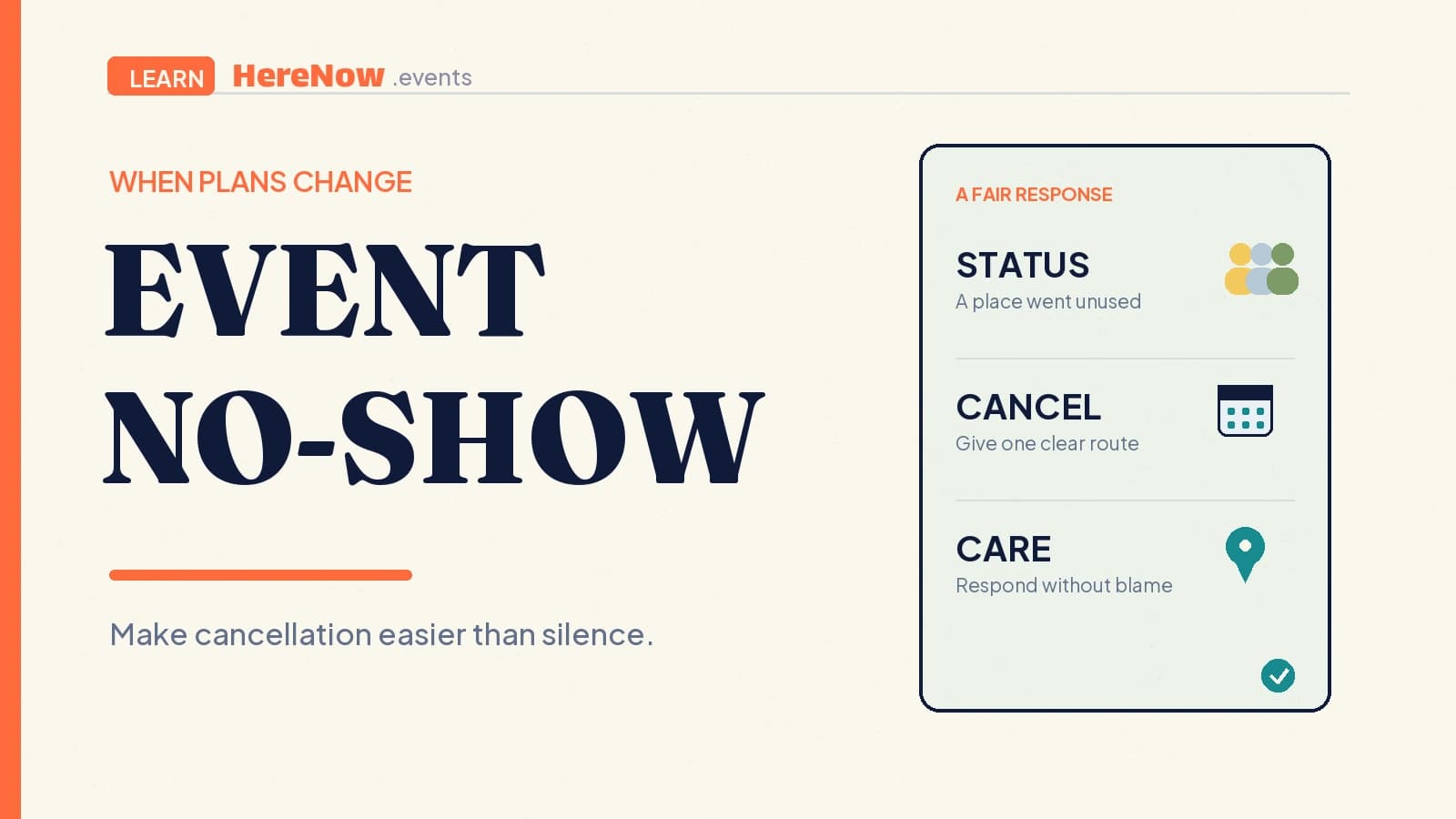
A no-show at an event is a person with a confirmed or reserved place who did not attend or use the stated cancellation process. It describes an attendance outcome, not why someone was absent. Illness, an emergency, transport trouble, or a missed message can all lead to the same record.
The short answer
- A no-show has a place but does not use it. The event has begun or passed, and the guest did not arrive.
- A cancellation is different. A guest who lets the host know in time has freed the place, even if they cannot attend.
- It matters most for limited events. An unused seat can mean unused materials, a smaller group, or a missed opportunity for someone on a waitlist.
- A thoughtful process is better than blame. Make cancelling easy, communicate the policy early, and respond to patterns rather than one unexplained absence.
The goal is not to eliminate every absence. It is to plan with realistic information and make space available when plans change.
What counts as a no-show
A no-show applies only after a defined attendance commitment, such as a registration, accepted invite, ticket, or approved place. If the guest neither attends nor uses the cancellation route the host provided, their place is recorded as unused.
The distinction from cancellation matters. Minnesota State defines cancellation as formal withdrawal before a program under its stated window, and a no-show as failing to attend without notice or a cancellation or transfer request. Its definitions give small-event hosts a useful principle: decide what counts as notice before the event and communicate it clearly.
Do not call someone a no-show simply because they arrive late, struggle to find the venue, or message just before the event. The format should determine how long a place can be held and whether late arrival can still work. A community walk and a class with safety instructions may reasonably handle lateness differently.
Why no-shows affect small events
At a large public talk, one empty chair may not change much. In an eight-person ceramics class, it can mean unused clay and one fewer guest. A supper club loses a place at the table; an online pair activity can lose a partner.
Accurate attendance information helps a host plan capacity, materials, and the welcome experience. Lehigh University notes that an accurate workshop roster supports planning and avoids unnecessary costs; when a workshop is full, a cancellation can also create an opportunity for another person to enroll. Its cancellation guidance captures the value of a simple, early message from a guest who cannot attend.
Do not overbook by default. Publish a guest limit you can support. If a place opens early, offer it fairly; if it opens too late, focus on the people present.
Make cancellation easier than silence
Put one obvious cancellation route in the confirmation and the practical pre-event message. It can be a link, a reply-to address, or a simple instruction to contact the host. State the meaningful deadline: not because every host needs a penalty, but because a deadline tells guests when their decision can still change preparation or create a place for someone else.
For events with payment, credentials, or tightly booked equipment, you may need a more formal policy. The U.S. Department of Agriculture’s National Finance Center publishes different cancellation windows and substitution rules for its classroom and virtual training. That policy is not a template for every gathering, but it illustrates that deadlines and substitution options should be stated before someone commits, not invented after an absence.
A fair no-show policy
Keep the policy proportional to the event. A free neighbourhood sketch walk may only need a friendly request to cancel when plans change. A paid workshop with an instructor, materials, and a short waitlist may need a published deadline and a clear rule about transfers or credits. State the rule on the event page and repeat the cancellation route in the confirmation. Leave room for a guest to explain an emergency privately. A policy is fair when people can understand it before they register, use it without friction, and know who to contact when the standard path does not fit.
Example: a twelve-person cooking class
A host plans a twelve-person cooking class and buys ingredients the day before. The event page explains that places are limited and asks guests to reply by noon the previous day if they cannot attend. The confirmation email repeats the same address and deadline. Two days before the class, one guest cancels, so the host offers the open place to the next person who has asked to be contacted if a space appears.
On the evening itself, another confirmed guest does not arrive and sends no message. The host records the unused place after the class but does not send an accusatory note that night. The next day, the host checks in briefly: “We missed you at the cooking class. I hope you’re okay. If you’d like to join a future session, please let us know.” If the same person repeatedly reserves scarce places without notice, the host can refer to the published policy before accepting another booking.
Respond after the event with care
A no-show record is useful only when it helps the host make the next event easier to run. Note the attendance outcome, review whether the invitation, confirmation, directions, or timing were confusing, and look for a pattern across several events before drawing a conclusion. Keep records limited to what you need for planning and apply the same rule consistently.
Some formal programs allow cancellation, transfer, or substitution before a stated deadline; the University of Washington, for example, sets out all three options for its courses. Its policy shows that a missed place does not have to be treated as a single, inflexible outcome. For a small host, offering just one clear route to cancel may be enough. Keep the event’s permalink accurate, then create an event in HereNow with the details guests need to make a reliable decision.
FAQ
Is a guest who cancels at the last minute a no-show?
Usually not, if they use the cancellation route you gave them. A late cancellation may still be hard for a host to replace, especially for a small event, but it provides useful information and avoids leaving the host unsure whether the guest is simply delayed. State any meaningful deadline clearly, while recognizing that emergencies can happen.
Should a host charge no-show fees?
Only when a fee is appropriate to the event and stated before registration, such as for a paid class with committed instructor time or materials. Many community events need no fee at all. The more important first step is to make cancellation simple and explain the impact of an unused place. A fee should never substitute for clear communication.
How should a host follow up after a no-show?
Use a brief, kind message and do not assume the reason. Confirm that the event has passed, invite the person to share relevant context if they wish, and point to the cancellation process for a future event. Avoid public callouts or language that shames someone. The relationship with a guest can matter more than recovering one unused place.