Event scenario
A community fix-it session where volunteers help guests diagnose broken household items, learn basic repair habits, and reduce waste together.
A friendly repair meetup where guests bring one broken item, get matched with helpers, and stay for coffee.
Start with this layout and agenda. Your draft stays with you through sign-in; review every detail before publishing.
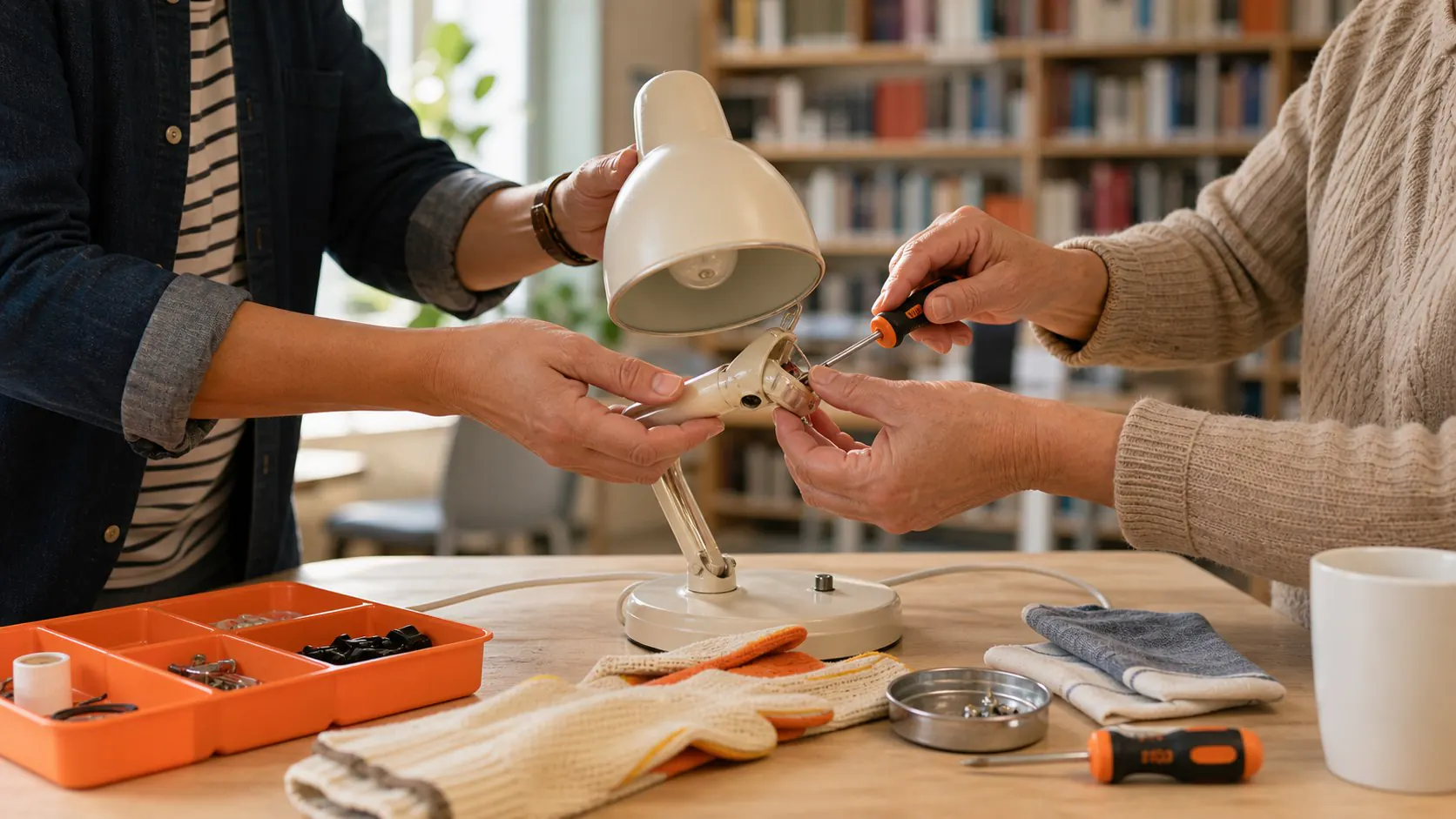
Suggested pricing: Free, donation-based, or $5-20 to support tools and venue costs. Best in library, maker space, community center, school workshop, or civic hall.
A community fix-it session where volunteers help guests diagnose broken household items, learn basic repair habits, and reduce waste together. Guests come because they want to save money, keep useful objects out of landfill, and learn from people who know how things work. The format gives civic organizers a clear intake, station, safety, and impact structure for a complex volunteer event.
A community fix-it session where volunteers help guests diagnose broken household items, learn basic repair habits, and reduce waste together.
Guests come because they want to save money, keep useful objects out of landfill, and learn from people who know how things work.
The format gives civic organizers a clear intake, station, safety, and impact structure for a complex volunteer event.
Give HereNow your venue, audience, timing, ticket details, and event tone to tailor Fix-It Coffee Hour for your community.
Use this template when the event needs to feel welcoming, useful, and operationally safe.
A monthly neighborhood repair cafe for small appliances, textiles, bikes, or electronics.
A library sustainability day with volunteers at themed stations.
A maker space open house that turns technical skill into community value.
A campus or workplace waste-reduction action with measurable impact.
The format gives civic organizers a clear intake, station, safety, and impact structure for a complex volunteer event.
Guests know what items are accepted and what cannot be repaired at the event.
Station roles, safety rules, and boundaries make the event easier to run.
The page can invite people into a concrete waste-reduction story, not just a casual meetup.
The strongest event pages usually add concrete host details: the place, the people, the promise, and the small moments that make guests picture themselves there.
The agenda gives first-time hosts a reliable shape while leaving room for your own personality, venue, and timing.
Timing is relative to the event start.
Item intake and triage
Repair stations and coaching
Parts notes and next steps
Impact count and cleanup
These are the basics hosts usually check before turning a template into a real event page.
No. The event should be framed as diagnosis and repair support, not a guarantee. Hosts should list accepted categories and limits.
Yes. Advance item details help the host match volunteers, tools, and station capacity.
Hosts should set clear rules for electronics, sharp tools, batteries, and anything volunteers cannot safely inspect.

A premium fragrance workshop where guests blend a personal scent and name the story behind it.

A welcoming first pottery session where guests learn basic clay handling, make a simple piece, and leave knowing exactly what happens next.

A sensory workshop for blending scents, pouring candles, and learning care basics.