Free RSVP vs Paid Tickets: How to Choose
A decision guide for choosing free RSVP, paid tickets, deposits, or a hybrid path based on commitment, cost, and trust.

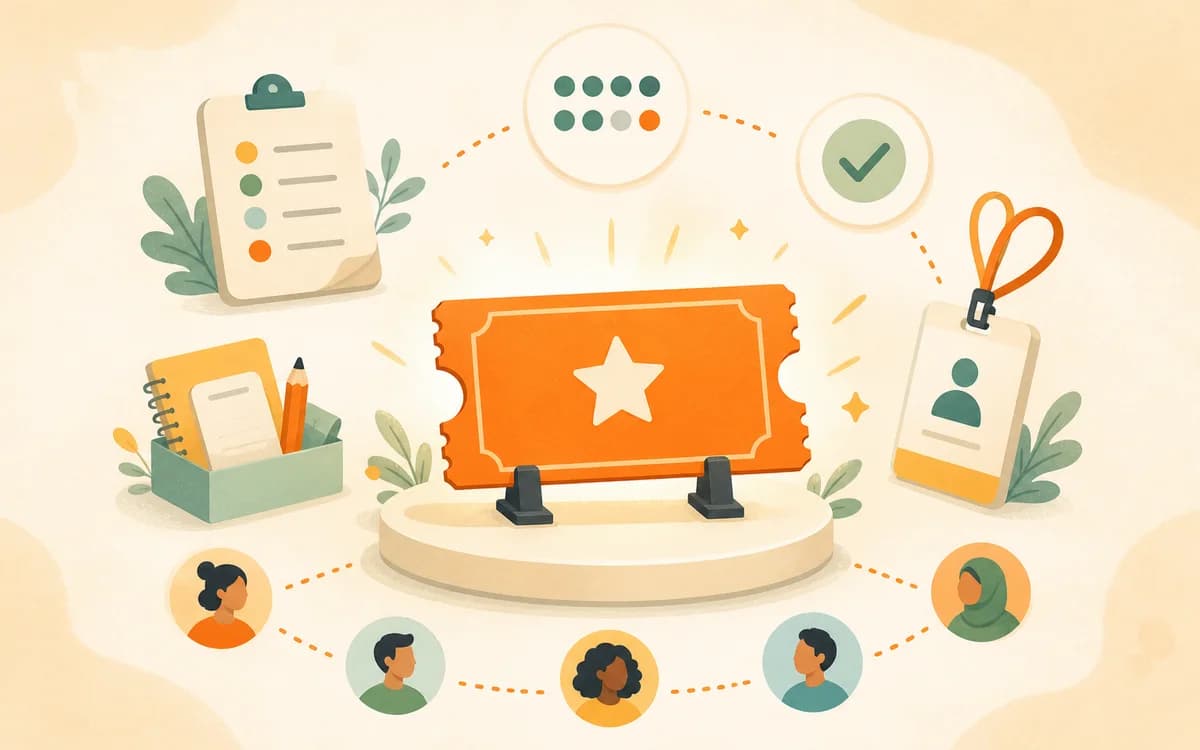
Choose free RSVP when low friction, audience learning, or community trust matters more than payment commitment. Choose paid tickets when the event has a clear value exchange, real delivery cost, limited seats, and enough trust on the page to support checkout.
The question is not whether paid is more serious than free. The question is which commitment matches the event's current promise. A free RSVP can be the right tool for a first community test. A paid ticket can be the right tool for a prepared workshop with materials, limited seats, and a buyer-ready page.
Key Takeaways
- Free RSVP reduces friction and helps hosts learn whether the audience wants the format.
- Paid tickets add commitment, but they also raise the trust bar before checkout.
- Free attendance does not automatically prove paid demand.
- Paid events need clearer inclusions, policies, capacity, and total price expectations.
- You can start free, learn from the room, and build a stronger paid version later.
Start With the Commitment You Are Asking For
A free RSVP asks for time, attention, and a contact detail. A paid ticket asks for time, attention, contact details, money, and trust that the host will deliver the experience. That extra commitment can be valuable, but only when the page and the event are ready for it.
Nielsen Norman Group's guidance on optional registration makes a useful point for this decision: people complete primary tasks more easily when unnecessary registration does not block them. For free events, the primary task is often simple attendance intent. For paid events, the primary task includes a financial decision, so the page must do more work before the guest pays.
Free RSVP is a lighter promise
Free RSVP works when the event's main value is participation, community, exploration, or learning what the audience wants. The guest is saying, "I am interested enough to show up." That is a real commitment, but it is intentionally light. The host should make the path easy, confirm details clearly, and avoid asking for more information than the event needs.
This lighter promise is useful for first-time hosts. It lets you test the title, time, format, audience, venue, and event page without turning every unknown into a price objection. It also gives people a low-risk way to experience your hosting style before you ask for money later.
Paid tickets are a stronger promise
Paid tickets work when the event has a clear value exchange. The guest should understand what they receive: materials, instruction, food, access, facilitation, a limited seat, or a specific outcome. The host should understand the delivery cost and be ready to answer buyer questions before checkout.
Payment can make a guest more intentional, but it also makes the guest more evaluative. A vague agenda, missing location details, unclear refund expectation, or thin host bio matters more when money is involved. Charging before the page is ready often exposes trust gaps rather than solving commitment gaps.
Use Free RSVP When Learning Matters Most
Free RSVP is strongest when the main risk is uncertainty. You may not know whether people want the topic, whether the time works, whether the room feels good, or whether the audience understands the format. A free event can answer those questions faster than a paid checkout funnel.
Free RSVP also reduces form and account friction. Baymard Institute's article on making guest checkout prominent is about ecommerce, but the operating lesson fits event RSVPs: the guest path should be easy to see when users are not ready to create an account or commit more than the task requires. HereNow's no-account RSVP model follows that same host-friendly logic.
Use free RSVP for early audience tests
Use free RSVP when your biggest question is "Will the right people raise their hands?" This is common for a new club, community meetup, trial class, casual salon, first book discussion, neighborhood walk, or topic test. The goal is not to prove revenue. The goal is to learn whether the idea, audience, language, and logistics create enough interest to justify a stronger offer.
Measure the right things. Did people understand the title? Did they register from the page or only after personal explanation? Did the time work? Did the room feel too small, too large, or just right? Did people ask for another date? These signals can help you design a later paid version, but they are not the same as paid demand.
Use free RSVP for community-first formats
Some events should remain free because the value is community access, not monetization. A neighborhood meetup, mutual-aid gathering, casual language exchange, volunteer orientation, or open discussion may work better when money is not part of the invitation. In those cases, the host's job is to reduce confusion and support participation.
A free event still needs structure. Keep the RSVP form short, explain capacity, confirm what happens next, and send useful updates. W3C's forms tutorial is a good reminder that registration forms should be understandable and accessible. A free RSVP should feel easy, not careless.
Use Paid Tickets When the Value Exchange Is Clear
Paid tickets are a fit when the event has something specific to deliver and a reason to recover cost: materials, food, venue, limited seats, instruction, professional preparation, or a designed experience. The ticket tells guests that the event is not only a gathering; it is an offer.
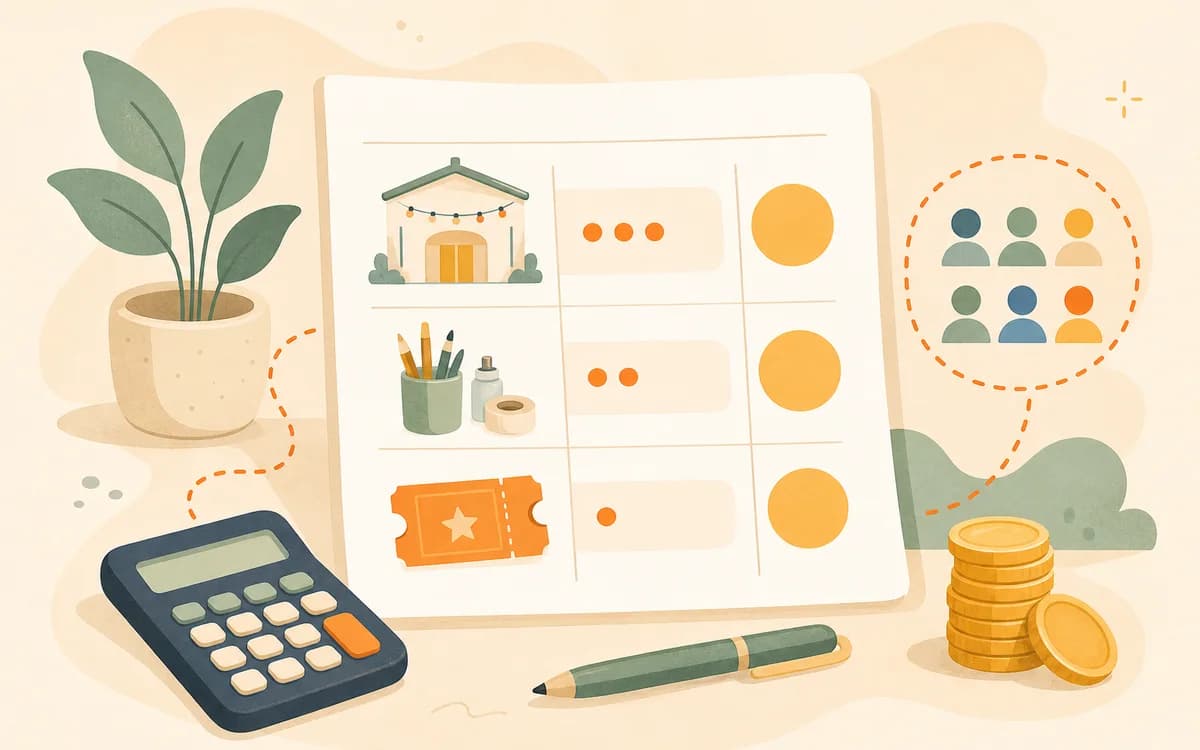
Before choosing paid tickets, list the cost floor. The U.S. Small Business Administration's startup cost guidance is broader than events, but it points to a useful discipline: identify expenses, estimate costs, and use that picture for break-even thinking. For an event host, that means knowing the room, supplies, food, host time, platform costs, and buffer before choosing a price.
Use paid tickets for prepared delivery
Prepared delivery means the host has something ready for each guest. That could be a kit, seat, tasting flight, worksheet, handout, guided exercise, instructor time, or carefully designed conversation. If each attendee creates a real cost or requires meaningful preparation, a paid ticket may be fairer and more sustainable than asking the host to absorb everything.
The event page should make the preparation visible. "All materials included" is useful. "Leave with one finished arrangement" is better. "Small group limited to 10 so each person gets feedback" helps guests understand why the price and capacity belong together. Paid tickets work best when the buyer can see the work before they pay.
Use paid tickets when commitment protects the room
Payment can protect limited seats, but it should not be used as a blunt instrument. A paid ticket makes sense when a no-show would waste a prepared kit, empty a small dinner seat, reduce the quality of a roundtable, or make the event financially unsustainable. It is less convincing when the only goal is to make the event "feel serious."
If commitment is the issue but the event is not ready to charge, consider other tools: a smaller RSVP cap, clearer confirmation, waitlist, personal invite, or reminder sequence. If the event does charge, make cancellation, transfer, and arrival expectations clear before checkout. Do not hide important buyer conditions in a follow-up email.
Compare Free RSVP and Paid Tickets
| Decision point | Free RSVP | Paid tickets |
|---|---|---|
| Best for | Community meetups, first tests, casual gatherings, low-cost open sessions. | Workshops, classes, tastings, tours, dinners, coaching sessions, limited-seat experiences. |
| Main advantage | Lower signup friction and faster audience learning. | Cost recovery, stronger commitment, and clearer buyer expectation. |
| Main risk | Weaker commitment or more uncertain attendance. | Higher trust burden and more questions before checkout. |
| Page requirement | Clear promise, logistics, capacity, and confirmation. | All free RSVP details plus inclusions, total price expectation, and payment readiness. |
| Best next step | Learn what guests value and improve the format. | Price responsibly and make delivery expectations explicit. |
Do not treat this table as a ladder where every host must move from free to paid. Some free events are strategically right forever. Some paid events should be paid from the first version because supplies, preparation, and seats are real. The decision depends on the event, not the host's ego.
Check the Trust Bar Before You Charge
Paid tickets raise the trust bar in predictable ways. A guest wants to know who is hosting, what is included, where the event happens, how long it lasts, who it is for, how many spots exist, what happens if plans change, and what the final payment expectation is. If the page does not answer those questions, checkout may feel premature.
Make the total payment expectation clear
For paid live events, price transparency matters. The FTC's Rule on Unfair or Deceptive Fees FAQ addresses hidden or misleading mandatory fees in live-event ticketing and short-term lodging. This guide is not legal advice, but the trust lesson for small hosts is straightforward: guests should understand the real payment expectation before they buy.
If taxes, fees, materials, optional add-ons, or supplies affect the final cost, do not leave the guest to discover that late. Use plain event-page language: what is included, what is optional, what is not included, and what the buyer will pay now. The more transparent the page is, the less the price feels like a trap.
Make personal data expectations clear
Paid tickets often involve more sensitive data than free RSVPs because payment, receipts, refunds, and attendee records may enter the flow. The FTC's personal information guidance recommends keeping only what is needed and protecting what is kept. That principle should shape both free and paid event registration.
For a free RSVP, avoid unnecessary personal questions. For a paid ticket, collect what is needed for purchase, attendance, and event operations, then be careful with exports and follow-up. Guests should not feel that paying for a workshop quietly enrolls them in unrelated marketing.
Run a Simple Decision Rule
Use this rule before you publish:
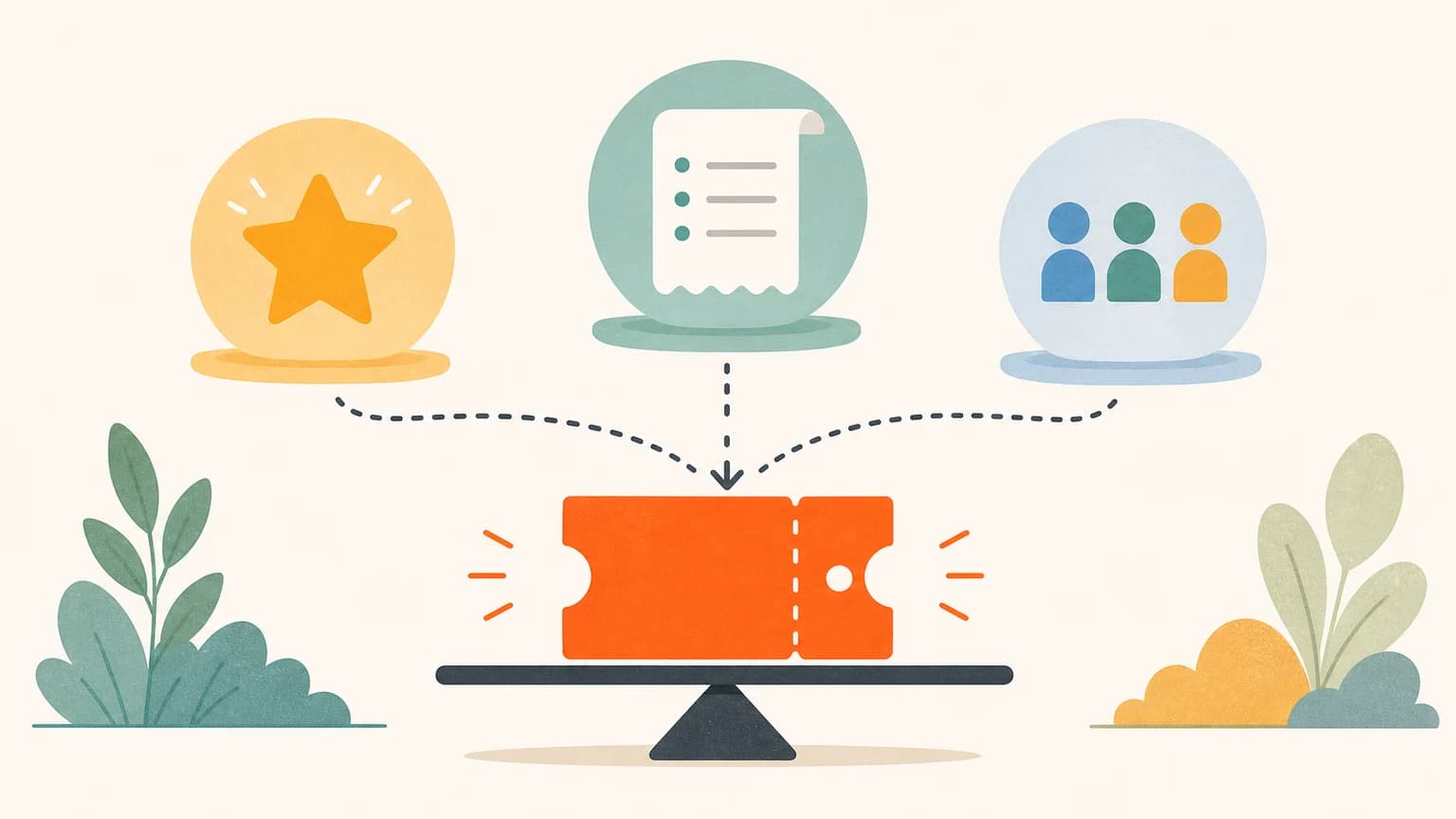
Use free RSVP when you are still proving the audience or format. Use paid tickets when the event has enough value, trust, cost structure, and page clarity to justify checkout.
Now test the rule with three practical questions:
- Would this event still make sense if everyone who registered showed up?
- Would guests understand what they receive without a personal explanation from the host?
- Would the host be comfortable repeating this event at the same price and capacity?
Free can be the research phase
A free event can help you learn what to charge for later. After the event, look for signals: what guests praised, what they asked for next, whether they would bring a friend, which parts required the most host effort, and which elements felt valuable enough to package. This is not a revenue result, but it is useful product learning.
The mistake is assuming that a full free room proves people will pay. It proves interest at zero price and low friction. To move toward paid, you need a clearer promise, visible inclusions, a cost floor, and a reason the next version deserves checkout.
Paid can be the sustainability phase
Paid tickets become more appropriate when the host has learned enough to design a repeatable event. University of Michigan's value-based pricing workbook emphasizes customer willingness to pay and relationship-building rather than simply adding a markup. For a host, that means using what you learned from real guests to build an event people can understand and value.
The paid version does not have to be complicated. One clear ticket, one strong promise, one honest capacity, and one useful FAQ usually beat a confusing set of tiers. Charge when the event is ready for the promise the price implies.
Make the Page Match the Choice
A free RSVP page should make the invitation easy. Keep the form short, avoid required accounts, explain what happens next, and make capacity honest. A paid ticket page should do more work before checkout: title, description, agenda, host bio, inclusions, location or access details, capacity, buyer expectations, and payment clarity.
Google's Event structured data documentation shows how many event details search systems may use, including dates, locations, event status, offers, and other structured fields. You do not need to think like a search engineer to benefit from the same principle: the event page should make the commitment legible.
Choose the Setup in HereNow
HereNow supports free events and Pro paid-ticket workflows. Free events are useful when you want low-friction RSVP and audience learning. Paid tickets are useful when the offer is ready for a clearer buyer commitment. Before publishing a paid event, review HereNow pricing and the Help Center guide to free RSVPs vs paid tickets.
You can create an event first, write the page clearly, then decide whether the first version should use free RSVP or paid tickets. If price is the open question, read how to price a small in-person event. If the signup path is the open question, read how to collect RSVPs without forcing account signup.
FAQ
Is free RSVP better for a first event?
Free RSVP is often better when you are testing a new audience or format because it reduces friction. It is not always better, especially if the event has real costs, limited materials, or a professional paid offer that guests can understand.
Do paid tickets reduce no-shows?
Paid tickets can increase commitment for some guests, but they do not guarantee attendance. No-shows still depend on timing, reminders, value clarity, audience fit, and whether guests trust the event enough to prioritize it.
Can I switch from free RSVP to paid tickets later?
Yes, but be careful with any live event that already has registrants. It is usually cleaner to use what you learned from a free event to create a new paid version with clearer value and expectations.
What should a paid ticket page include?
A paid ticket page should include the event promise, audience fit, agenda, host bio, what is included, what is not included when relevant, capacity, location or access details, and clear buyer expectations before checkout.
Should I charge if I am not sure people will come?
Not always. If the main uncertainty is audience interest, a free RSVP test may be more useful. If the uncertainty is only confidence, but the offer has clear value and real costs, a simple paid ticket can be reasonable.