Photo details
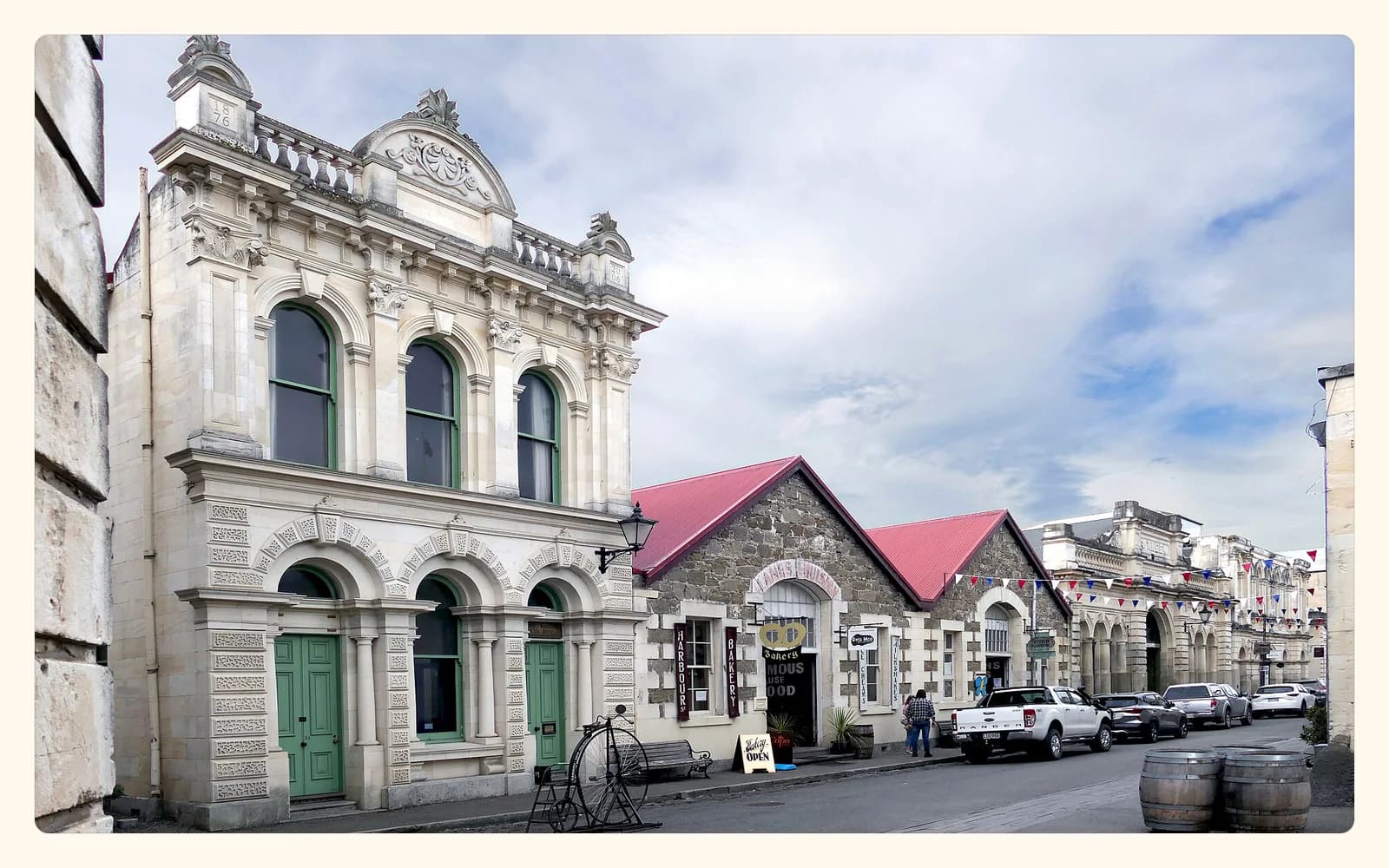
Harbour Street in Ōamaru's Victorian Precinct in May 2022. The 2026 festival filled this street with handmade characters; the embedded video shows the event itself.
Photo: Bernard Spragg. NZ / Wikimedia Commons · Public Domain Mark 1.0
Image adapted for this page.
In Ōamaru, Invented Personas Took Over a Victorian Street
At Steampunk NZ Festival, people arrived as airship captains, inventors, and impossible professionals, carrying handmade details that made a parallel world feel briefly real.
What actually happened
- Original event
- Steampunk NZ Festival 2026
- Date & time zone
- May 28–June 1, 2026 · Pacific/Auckland
- By
- Steampunk NZ Inc
- Format
- Participatory costume and maker festival
- Entry
- Festival programme · entry terms not publicly stated
What happened
From 28 May to 1 June 2026, Ōamaru's limestone Victorian Precinct became the setting for Steampunk NZ Festival. Run by Steampunk NZ Inc, the seventeenth edition used the theme Frontiers of Steam and filled Harbour Street with a parade, fashion, maker culture, social events, and invented sporting traditions.
The useful detail was not simply that people dressed up. AP reported guests arriving with elaborate personas, handmade outfits, recycled materials, modified props, and fictional professions. Elsewhere in the programme, teapot racers steered decorated machines around an obstacle course, parasol duelists competed on speed and style, and participants showed work that had taken months to refine.
A creator-shot video by Olderkiwitravellers lets the event keep its movement and scale. The camera travels through the 2026 festival among costumes, props, old machines, spectators, and people walking the street in character. New Zealand Review later highlighted the upload for capturing the homemade atmosphere rather than polishing it into a tourism advertisement.
See the event in motion
What draws people in
An invented role gives a guest something specific to offer before they know anyone else. A title such as airship engineer, cordial maker, or inspector of imaginary nuisances can become a first sentence; a hat, tool, badge, or altered household object becomes the next question. Conversation begins with curiosity about what the person made, not pressure to explain who they are in everyday life.
The event also leaves room for different levels of confidence. Metro News described a festival where someone could make a character, arrive incognito, or simply watch. That ladder matters: the shared world feels vivid because many people commit to it, but no single guest has to match the most elaborate costume in the street.
A shared fictional setting gives every guest one invented role and one piece of evidence that the role exists. Social energy comes from those small inventions meeting, without copying Ōamaru, the festival name, Victorian imagery, or steampunk itself.
If you host something similar
Treating costume as optional lowers the entry cost. A role card, borrowed accessory, paper badge, or five-minute prop-making table sits comfortably beside more developed outfits. A one-paragraph description of the imaginary city gives everyone the same world without prescribing the same look.
A locally rooted imaginary city draws on the room, neighbourhood, season, or materials already available instead of borrowing Steampunk NZ Festival's name, visual identity, characters, contests, or scripts. Original roles also keep the gathering distinct from a copyrighted film or game universe.
A quick arrival check covers sharp edges, flames, realistic weapons, obstructed sightlines, and objects that are difficult to carry through a crowd. A plain-clothes route, a low-sensory making table, wide movement paths, and separate photography choices give more guests a comfortable way into the fiction. When the event borrows from a historical period, a short framing note distinguishes playful invention from an uncritical version of that history.
The Impossible Profession Exchange
Invent a job that could exist only in your shared city, bring one object that proves it, and leave with a pocket directory of the people who made the world.
Every guest becomes the expert in a fictional occupation and uses one physical object as both proof of the role and an invitation to talk.
Host an impossible-profession exchange for 12–30 guests, where everyone invents a job from the same imaginary city, brings or makes one telling prop, trades in-character introductions, and adds a stamped entry to a shared directory.
Host checklist
- A role card, paper badge, or five-minute making table keeps the invitation open to guests who do not want to prepare a costume.
- A short original city premise gives the room shared logic without borrowing the name, characters, visual world, or scripts of an existing festival or franchise.
- A quick prop check catches sharp edges, flames, realistic weapons, blocked sightlines, and objects that are difficult to carry safely through the room.
- A plain-clothes route, seated making option, wide paths, and a quieter introduction table give guests a comfortable level of visibility.
- Photography remains separate from participation, with a clearly marked no-photo area and an easy way to keep a directory entry inside the room.
The idea will be ready in the event creator.
Questions hosts ask
Do guests need a full costume?
No. A role card, name badge, borrowed accessory, diagram, or small object can carry the idea. The event works when every guest has a contribution, not when every outfit has the same budget.
Does the event need a steampunk theme?
No. A seaside repair town, future night market, impossible university, travelling archive, or neighbourhood on another planet can support the same role-and-object exchange with an original visual language.
What if someone wants to observe first?
An observer badge, quiet making table, or first round with hosts can offer an easy entry. Guests can join a later introduction round when the room and its fictional rules feel more familiar.
What would you make from this?
Share a local twist, a different format, or a gathering this story set in motion.