Photo details
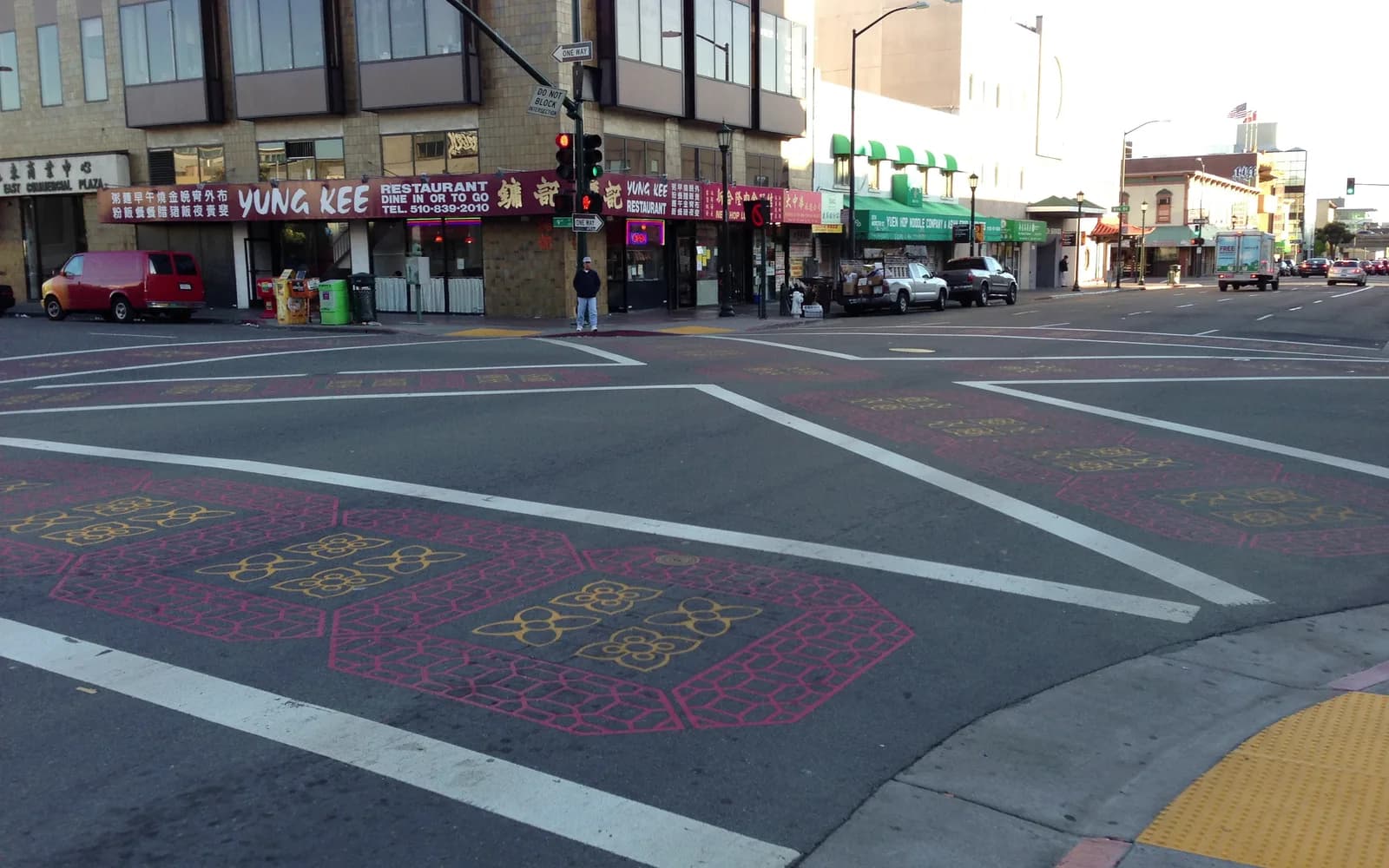
An Oakland Chinatown crosswalk in 2013. This is a city-context photograph, not a photograph of Strings Attached or its Wood Street venue.
Photo: Bill Taroli / Wikimedia Commons · Creative Commons Attribution 2.0 Generic
Image adapted for this page.
A 24-Person Oakland Craft Night Turned First Hellos Into a Small Make
At a June 2026 Strings Attached session in Oakland, That Art Party used 12 five-minute, craft-based introductions across four long tables. Tickets started at $22, and the public event record shows 24 people went. The useful lesson is a paid, hands-busy welcome—not its affinity space, dating frame, bracelet design, or brand.
What actually happened
- Original event
- Strings Attached
- Date & time zone
- June 18, 2026 · 18:00–21:00 · America/Los_Angeles
- By
- That Art Party
- Format
- Ticketed sapphic speed-dating craft social
- Entry
- Paid ticket · from $22 · QTBIPOC affinity event in the original listing
Twelve short rounds gave the room a first task
That Art Party's June 18, 2026 listing for Strings Attached described twelve five-minute rounds across four long tables at Native Studio Salon in Oakland. Each new pairing had a prompt card, friendship-bracelet materials, and a handoff before moving on. The listing identified the original as a QTBIPOC sapphic event, and tickets started at $22.
The Luma event record identifies That Art Party as the presenter and shows 24 people as having gone. That is a useful small-room reference point, not a capacity promise or a claim about every guest's experience. Neither public record publishes a revenue result, a match rate, or a measure of relationship outcomes.
A related activity context
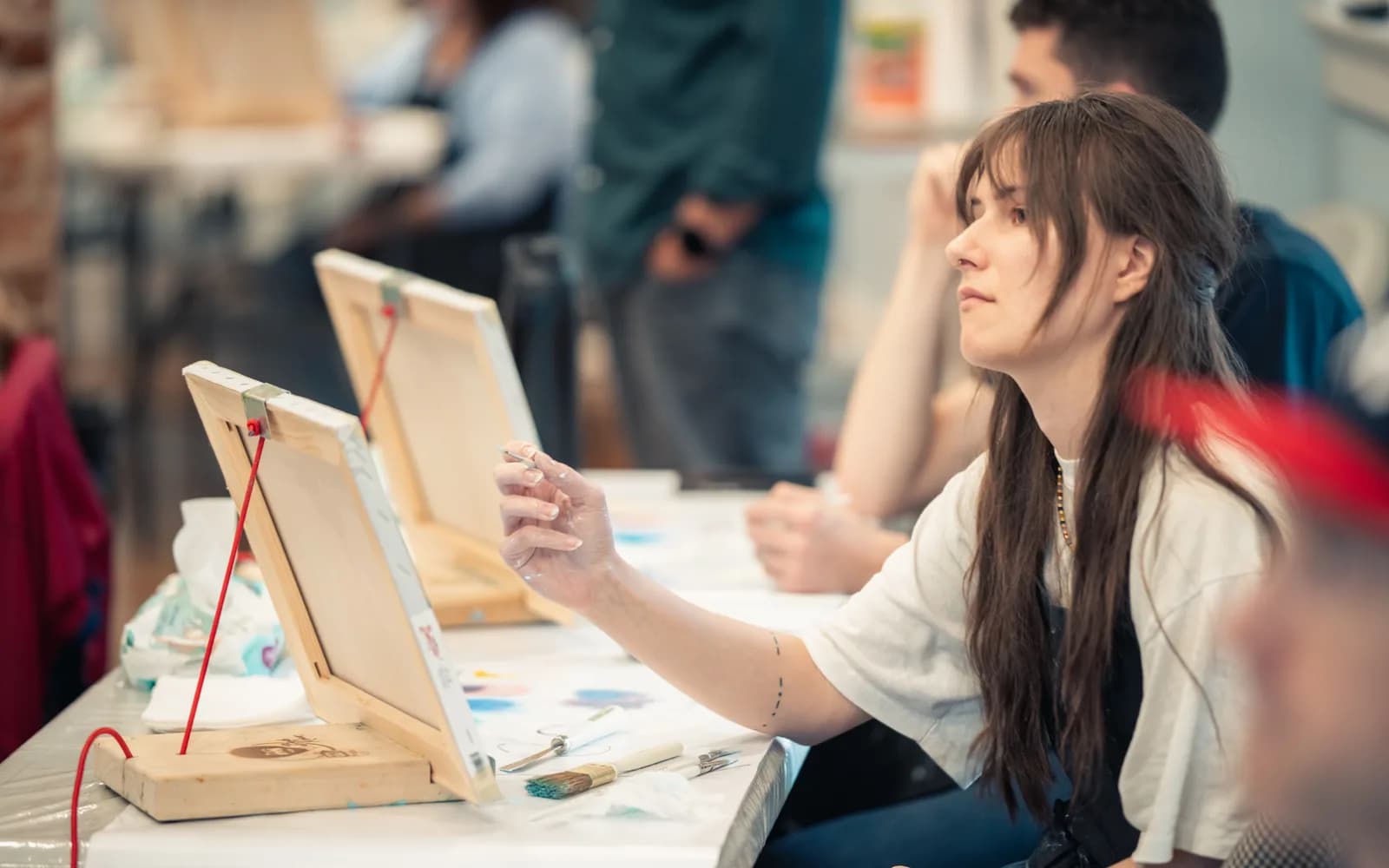
Photo details
A painting workshop at Minnetrista in Indiana in 2022. This rights-cleared workshop photograph illustrates a hands-busy social context; it does not show the Oakland event reported above.
Photo: MinnetristaMKT / Wikimedia Commons · Creative Commons Attribution-ShareAlike 4.0 International
Image adapted for this page.
The object does some of the social work
A shared task gives two unfamiliar people something concrete to notice before either has to perform a polished introduction. A short prompt, materials on the table, and a visible next step can make the first minutes easier to enter than a room-wide instruction to mingle.
For a small host, the commercial lesson is the legible ticket promise: a defined session, supplied materials, facilitated rounds, and an opt-in follow-up route. That can be priced from real room, material, host, staffing, and access costs without claiming that conversation, friendship, or dating will produce a guaranteed result.
Keep the welcome, change the audience and object
Build an original paired-make social around three simple paper objects: a tiny place card, a folded prompt, and a two-part take-home token. Guests can make together, work quietly, skip a question, or choose not to exchange contact information. Use original prompts, original visual language, and a name that does not trade on someone else's community or dating concept.
The reported event was explicitly made for QTBIPOC sapphic guests. Do not erase that audience or present a generic social as its substitute. If you create an affinity gathering, work with the relevant community, set a clear audience and consent boundary, and make the host team accountable to it. Otherwise, name your event as a general social and do not borrow the source identity, invitation language, relationship claims, or materials.
The Paired-Make Welcome
Make three tiny paper objects with new people, decide which exchanges you want to keep, and leave with a token that records one conversation worth continuing.
Every paired prompt produces a two-part paper token: each maker keeps one half, and the pair decides whether an optional follow-up card belongs with it.
Host a 16–24 person paired-make social with three original paper-object prompts, clear opt-in conversation choices, a gentle swap between tables, and a final optional follow-up card.
Host checklist
- Price a small pilot from confirmed room, materials, facilitation, staffing, access, payment-processing, and tax or fee costs; say exactly what the ticket includes and does not include.
- Use an original name, prompt set, paper objects, visual identity, and facilitation language. Do not use Strings Attached, That Art Party, its bracelet design, its table script, or its affinity and dating framing.
- Make every personal question optional. Give guests a clear no-photo choice, a quiet table or pause route, and a way to leave a pairing without explanation.
- Do not promise friendship, romance, a match, a professional introduction, or a personal outcome. Let contact exchange be opt-in and mediated by a simple paper or digital choice.
- If you plan an identity-specific or dating-oriented event, work with the relevant community and obtain appropriate local advice on participation rules, safety, privacy, consumer terms, and venue policy.
The idea will be ready in the event creator.
Questions hosts ask
Does this have to be a dating event?
No. The portable part is the short shared task and the clear changeover. A general social should be named as a general social and should not suggest that guests will meet a date, friend, client, or collaborator.
How can a small host charge fairly?
Set the price from confirmed room, materials, facilitation, staffing, access, payment-processing, tax or fee, and cancellation costs. State what the ticket includes, then avoid promising any social or personal result.
What makes contact exchange safe?
Treat it as optional. Offer a simple card or digital route that a guest can decline, and keep personal questions, photography, and follow-up separate from the basic right to take part.
What would you make from this?
Share a local twist, a different format, or a gathering this story set in motion.