Photo details
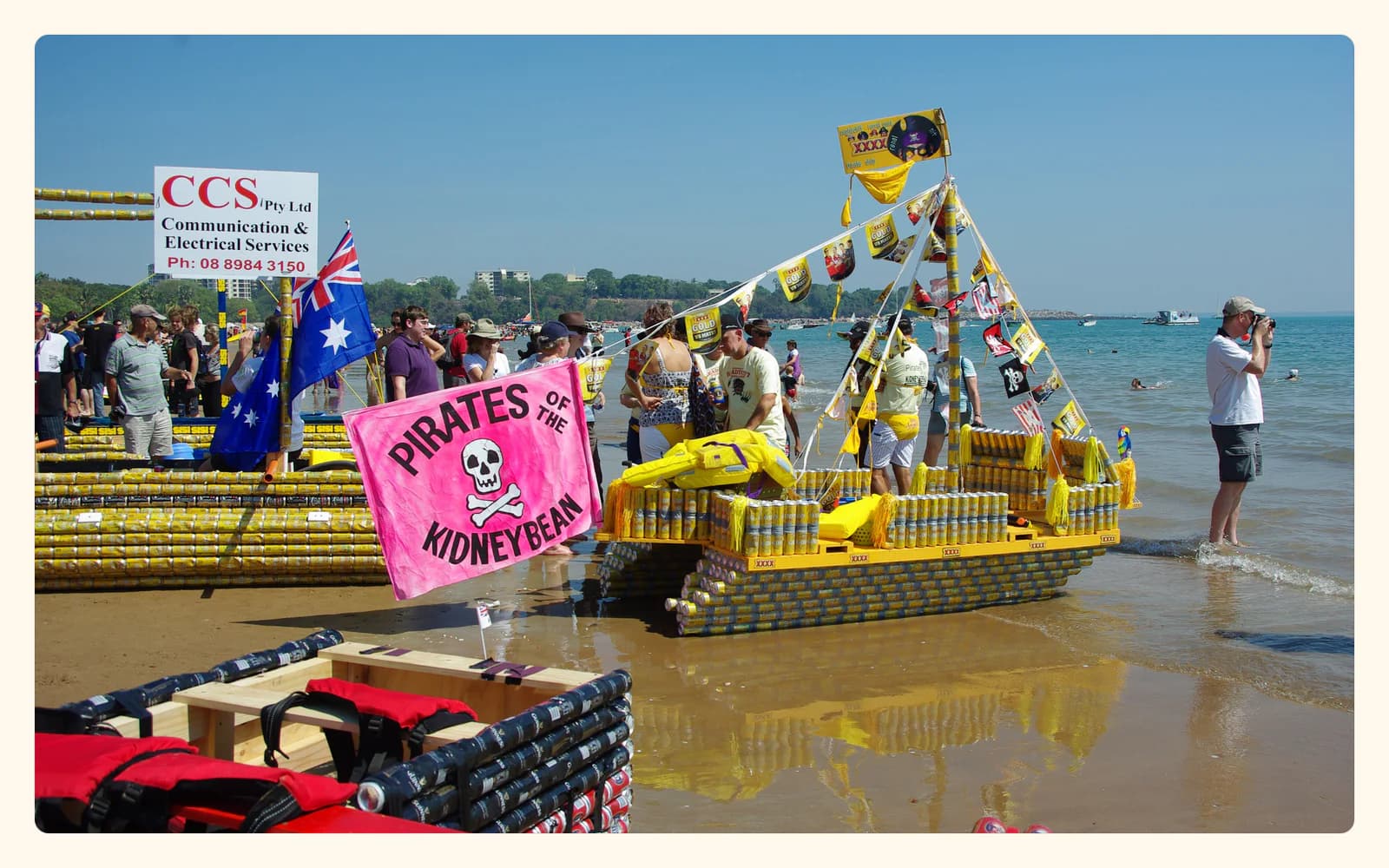
Watercraft and crews at the Darwin Beer Can Regatta in 2009. The embedded videos show the 2026 event.
Photo: Donama / Wikimedia Commons · CC BY 3.0
Image adapted for this page.
In Darwin, Boats Built from Drink Cans Raced Across Mindil Beach
Teams turned discarded drink containers into floating vessels, carried them across the sand, and discovered in public whether their designs could complete a beach race.
What actually happened
- Original event
- Darwin Lions Beer Can Regatta 2026
- Date & time zone
- June 28, 2026 · Australia/Darwin
- By
- Darwin Lions Beer Can Regatta Association
- Format
- Community-built boat regatta
- Entry
- Public beach event · entry terms not publicly stated
What happened
On 28 June 2026, homemade vessels assembled from drink cans and other recovered containers arrived at Mindil Beach in Darwin. Teams carried their builds to the water, climbed aboard, and raced inside an event zone watched from the sand.
ABC News reported that the boats were made mostly from beer cans and that three entries reached the 2026 regatta. The official event rules allow cans, plastic bottles, and milk cartons, as long as the finished vessel floats. That simple rule turns a familiar discarded object into something that must work in public.
The Northern Territory’s marine notice marked a closed-water area and recorded police and search-and-rescue support around the event. Attendee footage adds the close view: can-covered frames in the preparation area, teams moving between beach and water, and a crowd following the launch.
See the event in motion
What draws people in
The transformation is immediately legible. Guests can see the original containers, inspect the improvised structure, and then watch the same object meet a real test. A finished boat is funny before it launches; once it touches the water, everyone has a reason to pay attention.
Building also creates more than one way to matter. Collectors, cleaners, designers, fasteners, decorators, launch crew, paddlers, commentators, and spectators can all contribute to the same result. The vessel carries the team’s decisions into view.
The sequence carries the event: recover a humble material, turn it into a named working object, reveal it together, and let a short public test supply the ending. Neither the scale of the Darwin race nor its alcohol-linked name is required.
If you host something similar
At model scale, teams keep the anticipation while the host gains a more manageable test. Clean containers with checked edges and residues become no-rider vessels launched in shallow tanks, portable pools, or supervised lanes rather than open water.
The material plan covers collection, cleaning, joins, post-test recovery, and end-of-event recycling. Dry roles, an accessible viewing edge, splash guidance, and awards for crossing, reuse, naming, or recovery welcome guests who prefer not to get wet.
The Build-and-Float Reuse Boat Challenge
Turn a shared pile of clean discarded containers into a named vessel, then discover whether your team can send it across the lane.
Teams transform recognizable recovered containers into model vessels, reveal their designs, and face the same visible float-and-cross test.
Host a build-and-float reuse boat challenge for 18–48 guests in teams, using clean edge-safe containers to make model vessels, followed by a shallow-water launch, named awards, and no-rider races in supervised lanes.
Host checklist
- Clean containers, covered joins, and an edge check make the shared material bank comfortable to handle.
- A shallow controlled test area with no riders is easier to supervise than open water, with local venue guidance shaping the final setup.
- A recovery net, drain plan, and end-of-event sorting station keep every component moving out of the water and into the right waste stream.
- The invitation is ready once dry crew roles, accessible viewing, splash expectations, shade, drinking water, and a weather fallback are settled.
- The creative premise needs neither alcohol service nor alcohol branding, so any suitable clean containers may join the material list.
The idea will be ready in the event creator.
Questions hosts ask
Do the model boats need to be made from cans?
No. Clean bottles, cartons, lightweight offcuts, and reusable flotation pieces work too. The recognizable transformation matters more than copying one material.
How can the race work without riders?
Teams can use a gentle fan, hand-pulled tow line, measured pour, or another host-approved method that moves every model through the same shallow lane.
Can someone join without building or getting wet?
Yes. Material curator, name maker, commentator, timer, photographer, result recorder, recovery steward, and sorting roles can all stay dry.
What would you make from this?
Share a local twist, a different format, or a gathering this story set in motion.