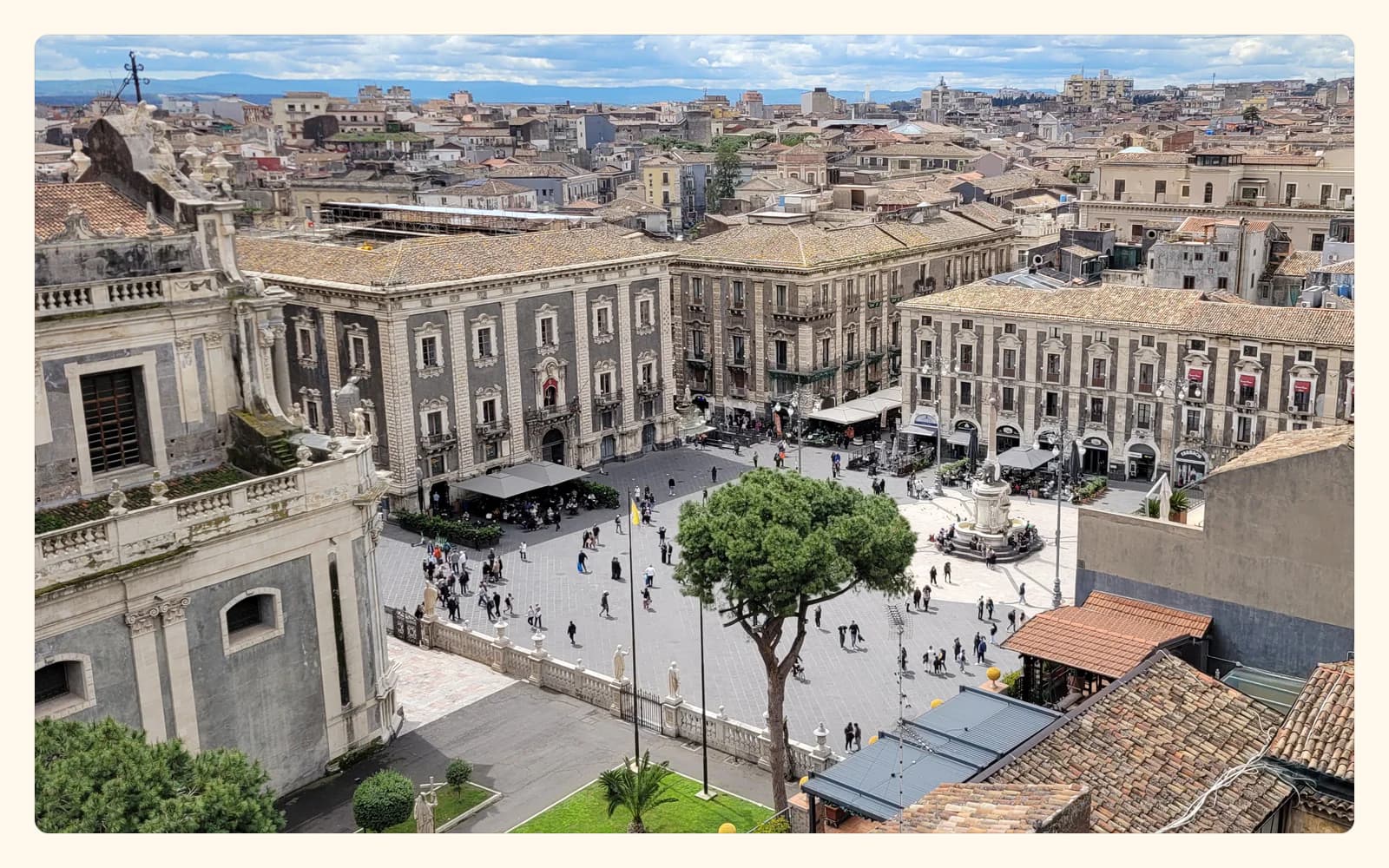
Photo details
Piazza del Duomo, Catania, photographed in April 2026. This is a location-context photograph, not a photograph of the meetup.
Photo: Mojnsen / Wikimedia Commons · Creative Commons Attribution 4.0 International
Image adapted for this page.
A Catania Coworking Meetup Turned Local Knowledge Into a Shared Map
At a recurring Catania meetup, people opened Wikipedia and OpenStreetMap together in a small coworking room. Start smaller than a conference: give each table one publicly verifiable fragment of a place, then let guests combine those fragments before the room closes.
What actually happened
- Original event
- Modifichiamo Wikipedia e OSM insieme
- Date & time zone
- May 22, 2026 · 19:00 · Europe/Rome
- By
- Wikimediani in Sicilia
- Format
- Recurring local Wikipedia and OpenStreetMap editing meetup
- Entry
- Free · open participation
One recurring table, two public knowledge tools
The OpenStreetMap community's May bulletin records a Catania session called “Modifichiamo Wiki e OSM insieme!” on May 22, and notes that it would return on June 19. Wikimedia Italia's diary lists the Catania editions on April 23, May 22, and June 19 at 19:00.
The public listings establish a repeating local editing format, not a crowd spectacle. They do not publish an attendee count, ticket price, or commercial result. @localhost describes its course room as seating up to 12, which makes the setting a useful reference for a host who wants a contained, repeatable room rather than a festival scale operation.
A related activity context
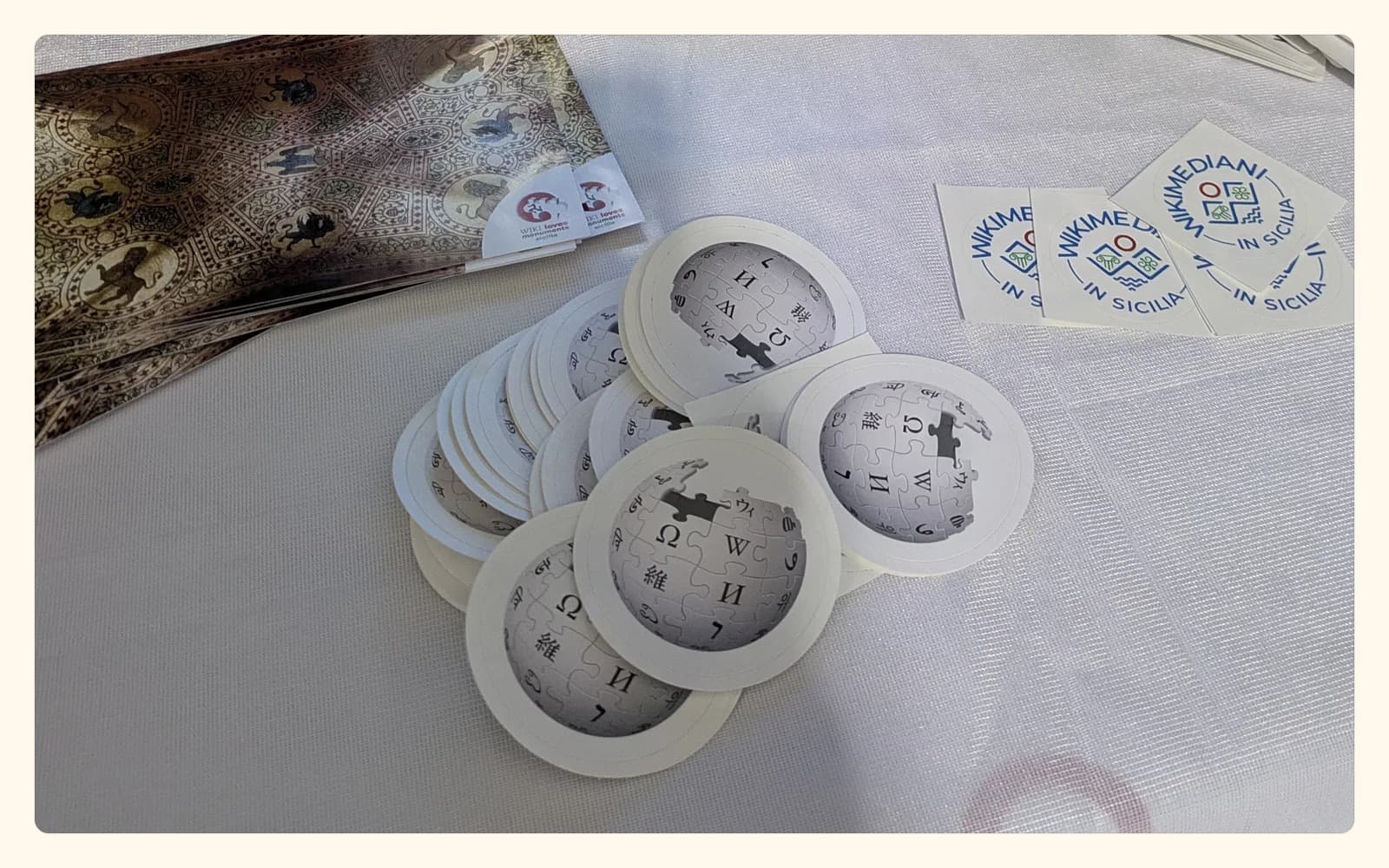
Photo details
A Wikipedia workshop in Catania in November 2025, organized by Wikimediani in Sicilia and GDG Catania. It documents the local editing community, not the May 22, 2026 meetup reported above.
Photo: Auregann / Wikimedia Commons · Creative Commons Attribution-ShareAlike 4.0 International
Image adapted for this page.
A tangible handoff gives conversation a job
A shared map is not just an output. It gives a stranger a specific reason to ask what someone knows, what is backed by a source, and what needs another pair of eyes. The work creates the social opening; the conversation does not have to carry the whole event.
For a small independent venue, that clarity is commercially useful. A modest seat transparently covers room time and facilitation, while the promise stays focused on a well-run table and a useful local handoff—not on access to a brand or a guaranteed business outcome.
Use a local question, not someone else's community identity
Choose one ordinary, public local question: where a person refills a water bottle, finds a shaded bench, accesses a public noticeboard, or locates an independently owned shop with published details. Ask each guest to bring one lead, then pair them to check what belongs on the room map.
Do not present the gathering as a Wikimedia or OpenStreetMap event unless you are actually authorized to do so. Build your own name, invitation, materials, published data rules, and follow-up. Never collect private addresses, identify people without consent, or add claims that a local owner cannot confirm.
Questions hosts ask
Does every guest need to know mapping software?
No. The guest role is as simple as bringing one public lead and helping review another. The host decides whether any item is published, and a paper-only contribution route keeps the room open to non-technical guests.
How can a small venue charge fairly?
Describe exactly what a paid place covers, such as room time, materials, and facilitation. Keep the price independent of any claimed business benefit, and state any free or sponsored places before people register.
What belongs on the table map?
Use everyday public details checked through a reliable source or the relevant place owner. Exclude private homes, personal contact details, guest histories, and any claim that cannot be verified.
What would you make from this?
Share a local twist, a different format, or a gathering this story set in motion.