Photo details
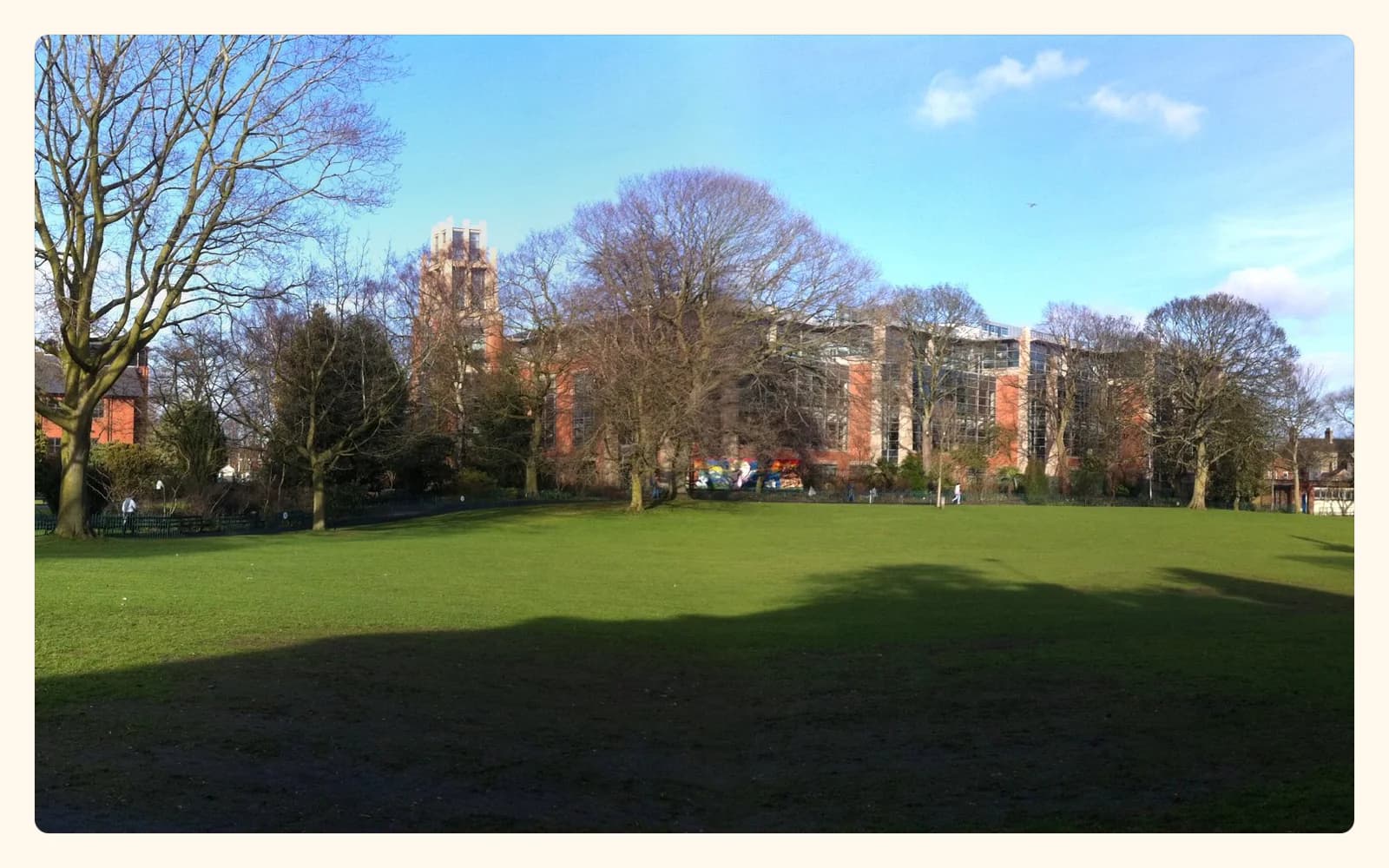
Botanic Green at Belfast’s Botanic Gardens, the park where BBC News NI documented Patrick Kruse’s public poem table.
Photo: Mickyfitz13 / Wikimedia Commons · CC BY-SA 3.0
Image adapted for this page.
In a Belfast Park, Five Words Became a Poem to Take Home
Patrick Kruse set a repaired 1940s typewriter on a park table and invited strangers to write with him. The exchange was brief, personal without demanding disclosure, and complete only when the guest left holding a poem.
What actually happened
- Original event
- One Poem a Day With Strangers
- Date & time zone
- Documented May–June 2026 · Europe/London
- By
- Patrick Kruse
- Format
- Drop-in typewriter poetry
- Entry
- Free · informal drop-in
What happened
In early June 2026, BBC News NI reported from Botanic Gardens in Belfast, where Queen’s University Belfast master’s student and former English teacher Patrick Kruse had begun arriving with a repaired 1940s typewriter and a handwritten sign offering free typewriter poems.
Kruse had set himself a year-long challenge: write at least one poem a day with strangers. On his first day in the park, he spent seven hours writing with 10 people. Over the following month, students, refugees, older first-time writers, day-trippers, and regular park visitors stopped at the table.
The exchange could begin with very little. One visitor supplied five words that mattered to her; Kruse shaped them into a poem about her spontaneous Belfast day trip, and she left with the typed page as a souvenir. The guest did not simply receive a performance. Her words gave the encounter its direction.
See the event in motion
What draws people in
The invitation is visible before it is verbal: a typewriter, a small sign, and one person ready to listen. A passer-by can understand the offer without entering a venue, learning specialist language, or deciding in advance that they are a poet.
Five words make a particularly generous starting point. They give the guest real authorship while keeping the first step small. The host contributes craft and attention; the guest contributes the details no one else could have chosen.
The typed page completes the exchange. It turns a few minutes with a stranger into something the guest can fold into a pocket, show a friend, or keep private. That small act of return is what makes the table feel different from a promotional giveaway or a performance people only watch.
If you host something similar
A similar event stays light by inviting words, images, sounds, or an everyday moment rather than asking for a confession. Guests choose whether the result is private, copied for a shared display, or read aloud.
The typewriter gives the original project much of its character, but it need not become a barrier. Large cards, handwriting, a tablet with a visible keyboard, or a guest dictating to the host offer equally complete ways to take part. In a park or other public space, a quick check on local permission, weather cover, seating, and pedestrian flow keeps the welcome relaxed.
The Five-Word Poem Table
Bring five words from your day, shape them into a short poem with a host, and leave with a one-of-one page made in that moment.
Each guest contributes five words, takes part in a five- to seven-minute co-writing exchange, receives the finished poem, and controls whether any copy is displayed.
Host a five-word poem table for 8–30 guests where each person offers five words, co-writes a short poem with a facilitator, and chooses whether a second copy joins a shared display.
Host checklist
- A few neutral prompt cards can help guests begin without feeling asked to disclose something personal.
- A clear choice between private, anonymous display, and credited display keeps ownership of the writing with the guest.
- Handwriting, typing, dictation, and large-print cards can all lead to the same finished experience.
- An outdoor table needs local permission, shade or rain cover, stable seating, and an uncluttered pedestrian route.
The idea will be ready in the event creator.
Questions hosts ask
Do guests need to know how to write poetry?
No. The five words are already a meaningful contribution. The host’s role is to shape them with the guest, not test the guest’s writing experience.
Does the event need a typewriter?
No. A typewriter creates a distinctive sound and object, but handwriting, a visible keyboard, dictation, or a small printer can preserve the same co-writing and take-home exchange.
Can the poems become part of a public display?
Only by choice. Offer private, anonymous display, and credited display as equally normal options, and let the guest take every draft if they prefer.
What would you make from this?
Share a local twist, a different format, or a gathering this story set in motion.