Photo details
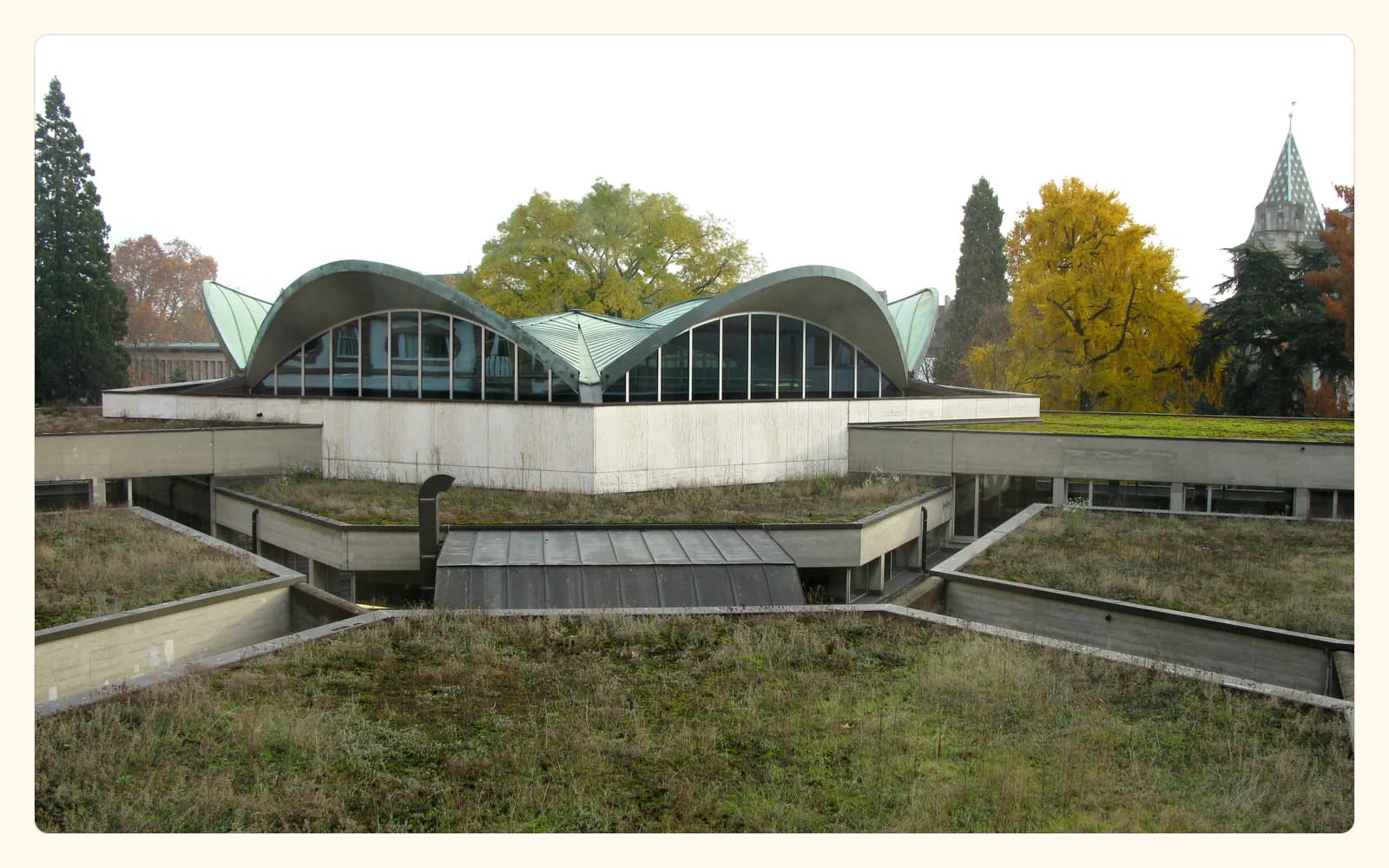
Basel University Library in 2009, beside the Petersplatz area where the 2026 festival’s Jodlerdorf and opening were based. This photograph does not show the festival.
Photo: Andreas Schwarzkopf / Wikimedia Commons · CC BY-SA 3.0
Image adapted for this page.
In Basel, a Festival Turned the Old Town into a Listening Route
At Switzerland’s 2026 national yodeling festival, performances, meeting places, and a closing parade spread across Basel’s old town. For an independent host, the route is the lesson: give guests several clear listening points and let them choose the sequence, without borrowing the tradition itself.
What actually happened
- Original event
- 32nd Eidgenössisches Jodlerfest Basel
- Date & time zone
- June 26–28, 2026 · Europe/Zurich
- By
- 32nd Eidgenössisches Jodlerfest Basel Organising Committee + Swiss Yodeling Association
- Format
- Three-day traditional music, alphorn, and flag-swinging festival
- Entry
- Free festival grounds · paid admission for judged performances
What happened
From June 26 to 28, 2026, Basel hosted the 32nd Eidgenössisches Jodlerfest, Switzerland’s national yodeling festival. The official programme placed festival life across the Grossbasel old town: Petersplatz became the Jodlerdorf, Petersgraben the Jodlermeile, and lanes, courtyards, Marktplatz, churches, concert halls, and school sites all carried different parts of the programme.
The festival combined judged performances in yodeling, alphorn playing, and flag swinging with public meeting places, a civic ceremony, and a Sunday parade. AP reported that singers and alphorn players filled the streets, while SRF described yodel choirs, alphorn sound, and traditional dress appearing throughout the city centre. The public festival grounds were free to enter; tickets were needed for the judged performances.
One exact-event upload from performer Iren Kiser records a duet with Manuela Amrein-Kiser and accompaniment by Sonja Schälin. It is a close, performer-led view of one live set from the Basel festival—not evidence that HereNow owns or can reproduce the music, repertoire, or cultural setting.
See the event in motion
Why this event works
The festival gave listeners more than one place to be. A guest could approach the city through a public square, a performance room, a lane, or a parade route, then decide which sounds and gatherings deserved more time. That choice makes a large programme easier to enter: no one needs to understand every tradition before following one point of curiosity.
The geography also turns transition time into part of the experience. Walking between short performances gives people a chance to compare atmosphere, meet others, and arrive with their attention reset. The programme feels connected because the route is shared, not because every guest has the same schedule.
The route, rather than the repertoire, is the part to adapt. Three distinct listening stations give local performers control of their own material and give guests a modest journey, without borrowing yodeling, alphorns, costumes, Swiss titles, or the source festival’s heritage.
If you host something similar
Start with performers and spaces, not an imported aesthetic. Three original ten-minute sets can be enough when each room has a different listening quality: an intimate spoken-word corner, a gentle acoustic set, or a room for participant-made ambient sound. Each performer can approve their billing, material, sound level, recording policy, and access needs before the route is announced.
A route needs an equally good non-route option. Clear timings, seating, a quiet room, step-free directions, one stationary listening point, and a simple printed schedule can let guests choose movement, stillness, or a mixture. If the event uses public-facing spaces, venue permission, neighbour impact, crowd flow, weather, and accessible entry routes are worth settling before invitations go out.
Keep participation light and optional. A route card can record a colour, a word, or a small drawing chosen by the guest rather than a recording of someone else’s work. Defaulting to no filming and asking before any documentation can protect performers and listeners without making the event feel formal.
Local Sound Walk
Choose your own path through three short original sets, notice how each room changes the way you listen, and take home a route card marked with the sound you want to remember.
Three short original sets happen in distinct listening stations while guests choose their own order and use a route card to turn movement between rooms into a shared, low-pressure discovery trail.
Host a Local Sound Walk for 18–36 guests, where three local performers each offer a short original listening set in a different accessible room and guests carry a route card, choose their own order, and add one non-recorded sound memory at the final table.
Host checklist
- Each performer sets their material, set length, credit, sound level, access needs, and recording or photography boundary.
- An original event name, visual language, and route design keep the format distinct from yodeling, alphorn repertoire, Swiss dress, festival titles, and other cultural material from the Basel source event.
- Step-free directions, seating at every station, a quiet room, one stationary listening route, and a printed schedule keep discovery from requiring continuous movement.
- Venue permission, sound limits, neighbour impact, weather, crowd flow, and a simple lost-guest meeting point belong in the route plan before it is public.
- Guests may keep the route card private or add only their own word, colour, or drawing at the closing table; no performer work needs to be copied onto it.
The idea will be ready in the event creator.
Questions hosts ask
Do I need professional musicians for a Local Sound Walk?
No. A community choir, spoken-word artist, field-recording maker, student ensemble, or local instrumentalist can each lead one station when they choose their own material, credit, technical needs, and recording policy.
Must every guest visit every listening station?
No. The choice is part of the format. Give guests clear times and a quiet or stationary route so a person can follow one set deeply, sample several, or stay in the common room without missing the event’s welcome.
How can I keep the event distinct from the Basel festival?
Use a new name, local performers’ original work, your own route and visual language, and clear credit. Do not copy Swiss yodeling, alphorn repertoire, costumes, festival names, or other cultural material from the source event.
What would you make from this?
Share a local twist, a different format, or a gathering this story set in motion.